
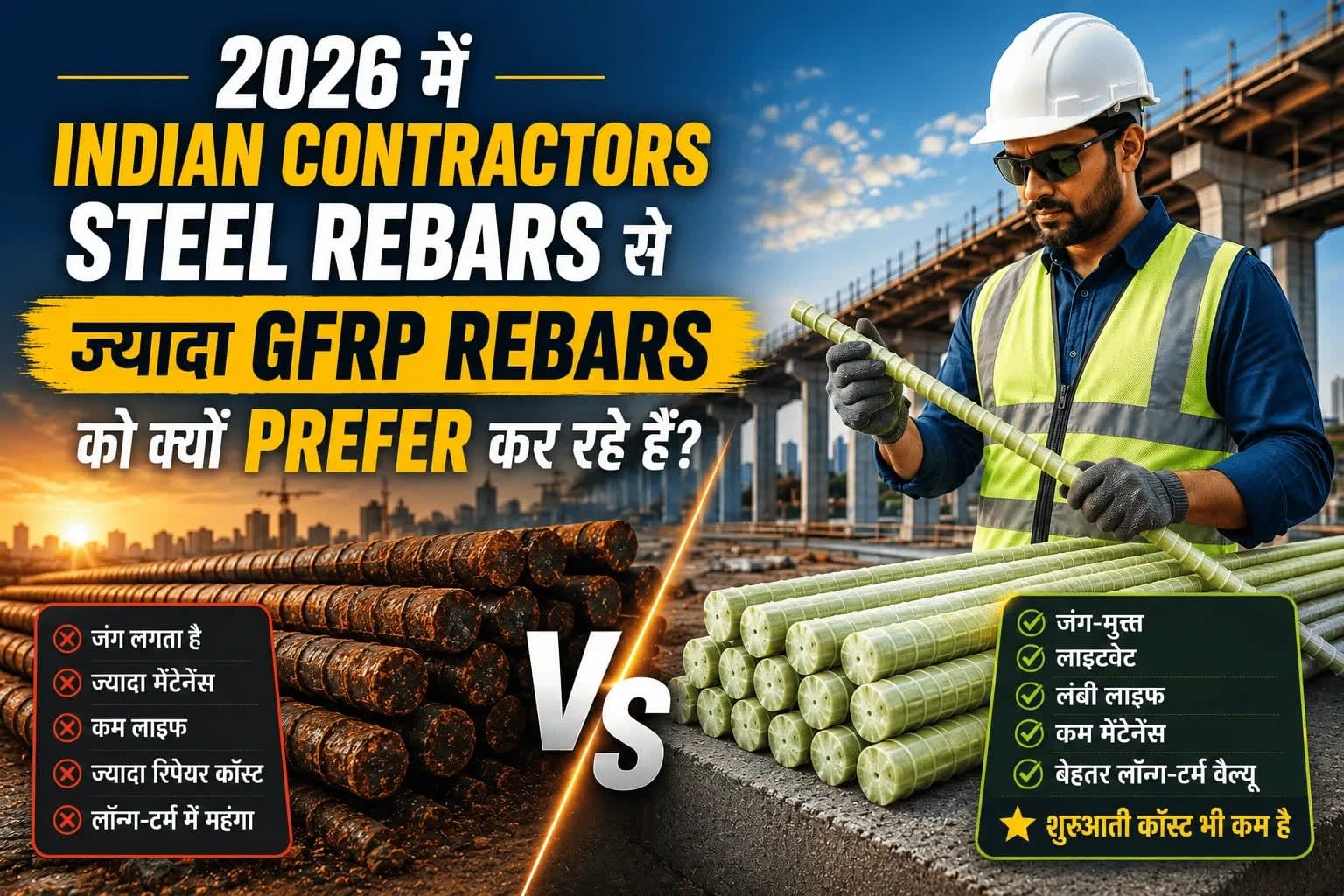
Introduction to Modern Heavy Traffic Road Construction
Heavy-traffic road construction requires materials that can withstand constant high axle loads, repetitive stress cycles, and aggressive environmental exposure. Conventional reinforcement materials often deteriorate under these demanding conditions, leading to premature cracking, frequent repairs, and higher lifecycle costs.
Glass Fiber-Reinforced Polymer (GFRP) rebars are increasingly recognized as a superior reinforcement option for heavy-duty road infrastructure. Their combination of high tensile strength, corrosion resistance, lightweight, and long-term durability makes them ideal for highways, expressways, industrial corridors, and logistics hubs that handle continuous heavy-vehicle movement.
Understanding GFRP Rebars in Road Infrastructure
What Are GFRP Rebars?
GFRP rebars are composite reinforcement bars made with high-strength glass fibers embedded in a polymer resin matrix. Unlike traditional steel reinforcement, these rebars are completely non-corrosive, making them highly effective in harsh and moisture-prone environments.
Key Material Characteristics
GFRP rebars offer several advantages that align with heavy traffic road requirements:
- High tensile strength for improved structural performance
- Corrosion immunity in aggressive environments
- Lightweight handling for efficient construction
- Low thermal conductivity for stability under temperature variations
These characteristics significantly improve pavement durability and reliability.
Challenges in Heavy Traffic Road Construction
rapidly under such conditions, leading to structural damage and increased
Heavy-duty roads experience constant stress from trucks, trailers, and heavy machinery. Over time, repeated loading cycles lead to:
- Surface cracking
- Structural fatigue
- Reduced service life
Traditional reinforcement materials often fail to sustain long-term performance under these conditions.
Environmental Exposure and Corrosion Risks
Heavy traffic roads frequently encounter harsh environments, including:
- Moisture infiltration
- Chloride exposure from de-icing salts
- Industrial chemical contamination
Steel reinforcement deteriorates rapidly under such conditions, leading to structural damage and increased maintenance costs.
Frequent Maintenance and Operational Disruptions
Roads reinforced with conventional materials often require regular repairs and overlays. These maintenance cycles cause:
- Traffic congestion
- Increased operational costs
- Project inefficiencies
This highlights the need for more durable reinforcement solutions.
Why GFRP Rebars Are Ideal for Heavy Traffic Roads
Exceptional Corrosion Resistance
GFRP rebars are highly corrosion-resistant, even in aggressive environments. Unlike steel, they do not rust or expand due to chemical exposure. This leads to:
- Extended pavement lifespan
- Reduced structural deterioration
- Minimal maintenance intervention
This property alone makes GFRP highly suitable for heavy traffic applications.
High Load-Bearing Capacity
The superior tensile strength of GFRP rebars enables effective stress distribution across concrete slabs. This reduces:
- Load-induced cracking
- Slab deformation
- Structural weakening
Roads reinforced with GFRP show improved stability and performance over time.
Outstanding Fatigue Resistance
GFRP rebars maintain their structural integrity even under repeated loading cycles. This makes them particularly suitable for:
- High-volume highways
- Industrial transport routes
- Mining and logistics corridors
The result is consistent performance with minimal fatigue-related failures.
Enhanced Crack Control in Concrete Pavements
GFRP reinforcement significantly improves crack resistance by distributing stress evenly throughout the pavement structure. This minimizes:
- Shrinkage cracks
- Thermal cracks
- Load-induced fractures
Improved crack control enhances both structural longevity and ride quality.
Lightweight Advantage for Faster Construction
GFRP rebars are significantly lighter than steel, making them easier to transport, handle, and install. Benefits include:
- Faster reinforcement placement
- Reduced labor effort
- Improved construction efficiency
These advantages help accelerate project timelines in large-scale road developments.
Thermal Stability in Extreme Conditions
Temperature fluctuations often cause expansion and contraction in traditional reinforcement systems. GFRP rebars demonstrate:
- Low thermal conductivity
- Stable dimensional performance
- Reduced thermal stress impact
This ensures long-term pavement stability across diverse climates.
Lifecycle Cost Benefits of GFRP Roads
Reduced Maintenance Costs
The corrosion-resistant nature of GFRP minimizes repair requirements. Roads reinforced with GFRP typically experience:
- Fewer maintenance cycles
- Lower repair costs
- Reduced traffic disruptions
Long-Term Cost Efficiency
Although the initial investment may be higher than steel reinforcement, the lifecycle cost analysis shows substantial savings due to:
- Extended service life
- Minimal rehabilitation needs
- Lower downtime expenses
This makes GFRP a cost-effective solution for heavy traffic infrastructure.
- and low-temperature
Highways and Expressways
GFRP rebars are widely used in high-speed corridors requiring durability and minimal maintenance.
Industrial and Mining Roads
These environments demand reinforcement capable of handling heavy loads and chemical exposure.
Port and Container Terminals
GFRP ensures reliable performance in areas with constant heavy-vehicle traffic.
Airport Runways and Taxiways
Fatigue resistance and long-term strength make GFRP ideal for aviation infrastructure.
Sustainability Benefits of GFRP Roads
GFRP supports sustainable infrastructure by:
- Reducing material wastage
- Lowering carbon emissions from maintenance operations
- Extending pavement lifespan
These benefits align with global goals for environmentally responsible construction practices.
Design Considerations for GFRP-Reinforced Roads
Optimized Reinforcement Layout
Proper spacing and placement ensure maximum load distribution and structural performance.
Bond Strength Enhancement
Surface textures on GFRP rebars improve bond to concrete, enhancing durability.
Compliance with Engineering Standards
Modern design guidelines support the use of composite reinforcement in heavy traffic pavements.
Future Outlook for Heavy Traffic Road Construction
The adoption of advanced composite materials is transforming infrastructure development. GFRP rebars are becoming a preferred choice due to:
- Rising maintenance costs of traditional systems
- Increased demand for durable infrastructure
- Advancements in composite manufacturing
These trends indicate strong future growth for GFRP in road construction.
Conclusion
GFRP rebars are the most reliable reinforcement option for heavy-traffic road construction. Their superior corrosion resistance, high tensile strength, fatigue durability, and lifecycle cost efficiency make them ideal for demanding applications. Integrating GFRP into pavement design ensures long-lasting performance, reduced maintenance requirements, and improved infrastructure sustainability.
FAQs
1. Why are GFRP rebars suitable for heavy traffic roads?
They offer high strength, corrosion resistance, and fatigue durability, making them ideal for continuous heavy loads.
2. Do GFRP rebars reduce maintenance needs?
Yes, their non-corrosive nature significantly lowers maintenance frequency and costs.
3. Are GFRP roads cost-effective in the long term?
Lifecycle savings from reduced repairs and longer durability make them highly cost-effective.
4. Can GFRP rebars handle extreme weather conditions?
Yes, they perform consistently in both high- and low-temperature environments.
5. Where are GFRP rebars commonly used?
They are widely used on highways, industrial roads, port facilities, and airport pavements.