
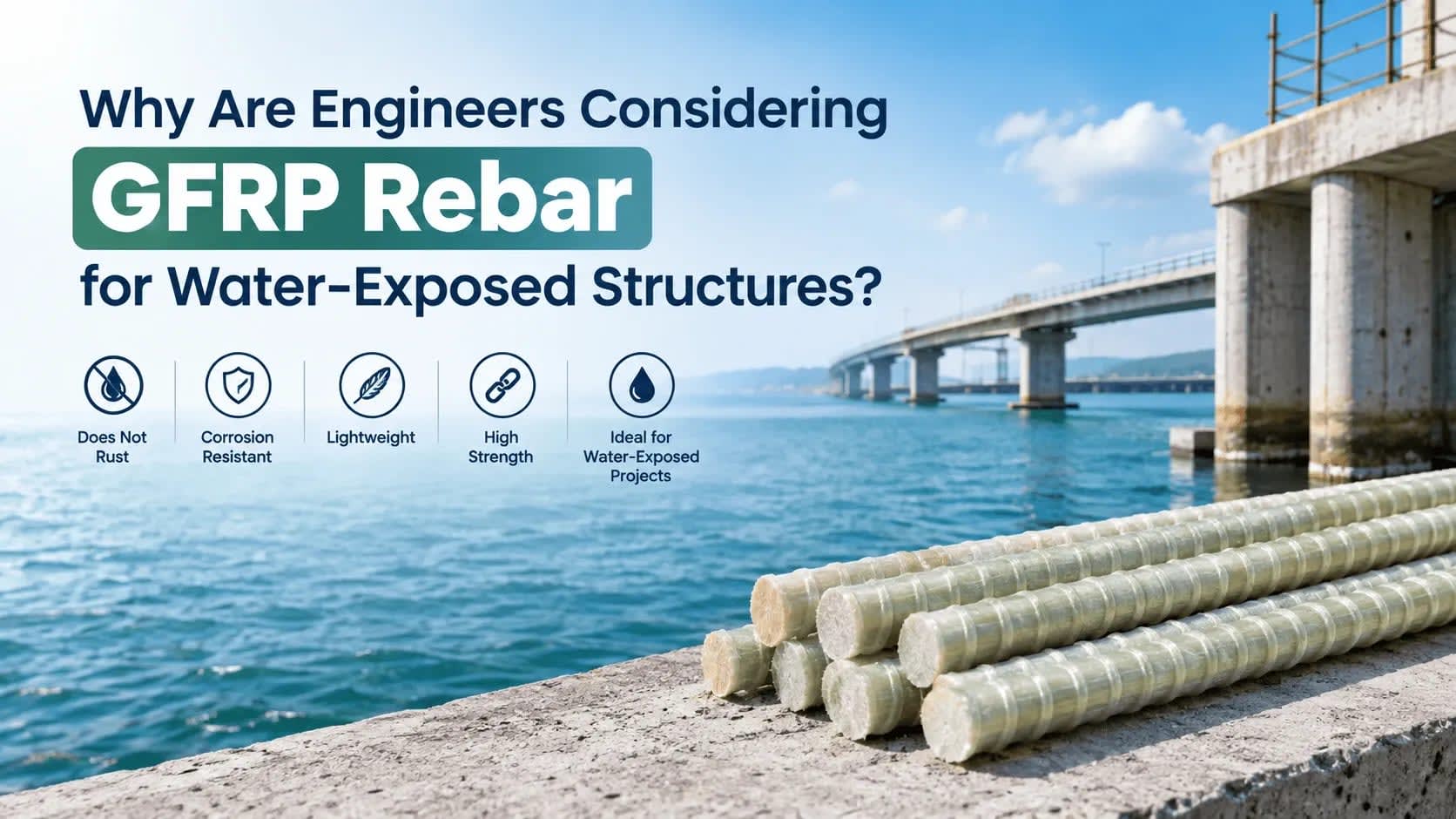
Water can be a major problem for concrete structures because it can cause steel reinforcement inside concrete to rust over time. So, why are engineers looking at GFRP Rebars for structures that are regularly exposed to water? The main reason is simple: Glass fiber reinforced polymer rebars does not rust and can help make concrete structures more durable.
Engineers are considering GFRP rebar because it does not rust or corrode when exposed to water and moisture. It is a strong, lightweight, and corrosion-resistant reinforcement option that can be used in bridges, water treatment plants, swimming pools, marine structures, drainage systems, and other water-exposed projects.
Why is GFRP rebar a good choice for structures exposed to water?
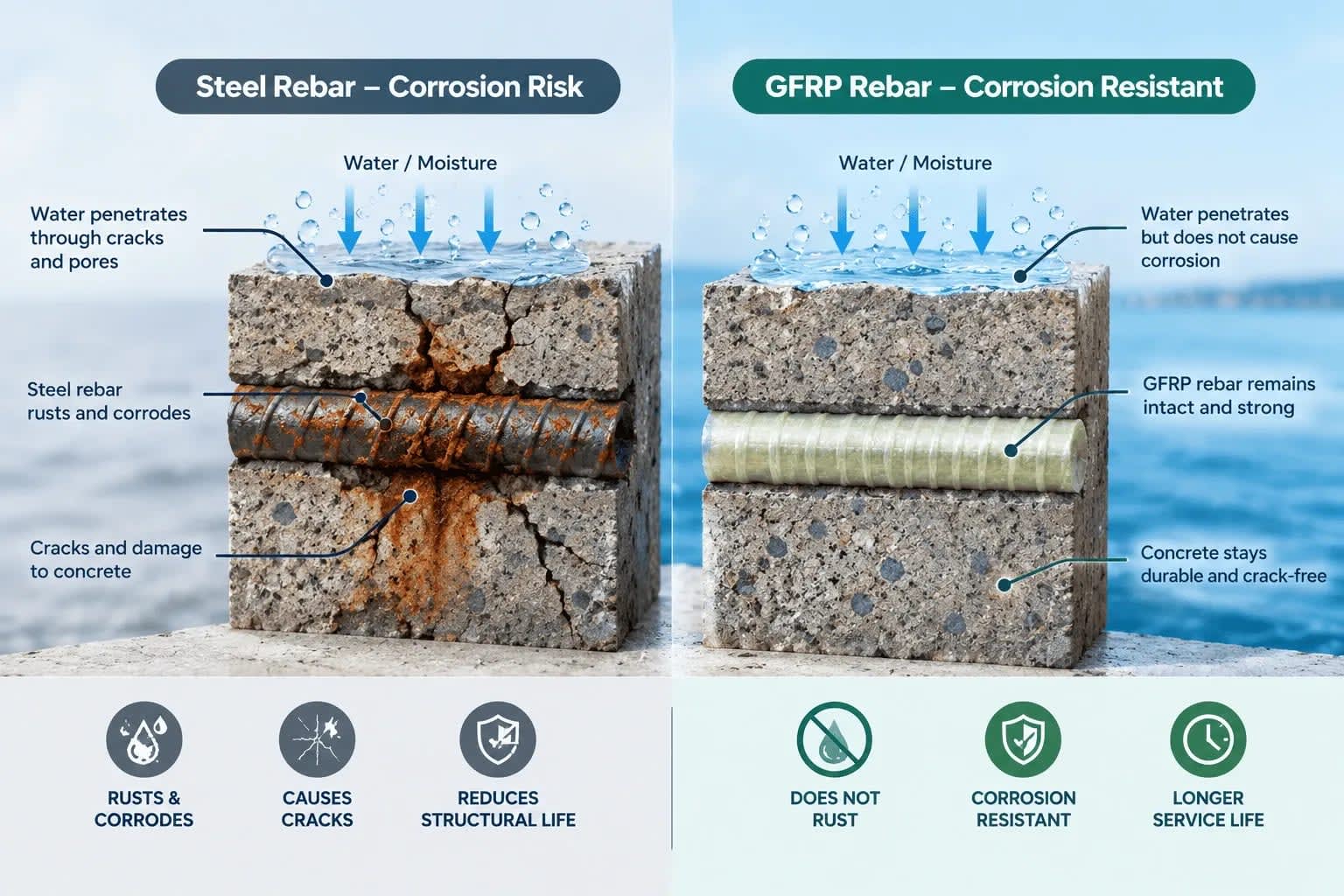
Steel reinforcement can start to rust when water and chemicals reach it through cracks or pores in concrete. As rust develops, it can cause the steel to expand and put pressure on the surrounding concrete.
This may lead to:
- Cracks in concrete
- Concrete breaking or coming off
- Damage to the reinforcement
- More repair work
- Higher maintenance needs
GFRP rebar does not have the same rusting problem. It is made from glass fibers and a resin that together form a strong reinforcement material.
This makes fiberglass sariya useful choice for structures that regularly come in contact with:
- Water
- Moisture
- Saltwater
- Chlorides
- Chemicals
- High humidity
For such projects, choosing a corrosion-resistant reinforcement can help protect the structure for a longer period.
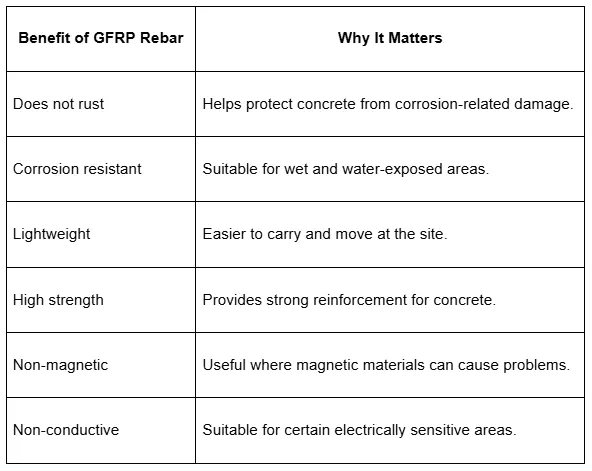
What are the main benefits of GFRP rebar in water-exposed structures?
Fiberglass rebar offers several benefits that make it suitable for water-related construction projects.
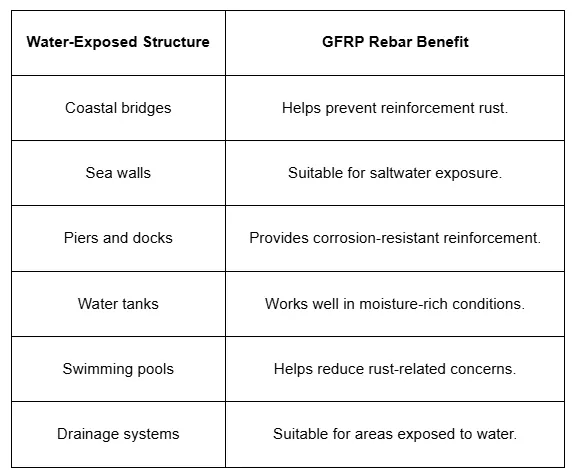
Where can GFRP rebar be used in water-exposed structures?
The range of gfrp applications is growing as more construction projects look for reinforcement that can handle moisture and corrosion concerns.
Some common applications include:
Bridges and bridge decks
Bridges are regularly exposed to rain, moisture, and, in some regions, salt and de-icing chemicals. Glass fiber reinforced polymer bars can help reduce concerns related to reinforcement rusting in these structures.
Marine structures
Piers, docks, seawalls, and other structures near the sea are exposed to saltwater. GFRP is a useful option because it does not rust when exposed to saltwater.
Water treatment plants
Water treatment and wastewater facilities often have concrete structures that remain exposed to water and chemicals. GFRP can provide corrosion-resistant reinforcement for these applications.
Swimming pools and water tanks
Swimming pools, tanks, and reservoirs remain in contact with water for long periods. Using GFRP can help avoid the common problem of reinforcement rusting.
Drainage structures
Drains, channels, culverts, and other water management structures can also benefit from corrosion-resistant reinforcement.
How does GFRP help in marine and coastal construction?
Saltwater is especially harmful to steel reinforcement because it contains chlorides. These can enter concrete and eventually reach the steel inside.
Fiberglass sariya offers a simple advantage here: it does not rust.
This makes it a suitable reinforcement option for many coastal and marine projects.
By using fiberglass sariya, engineers can focus on building structures that are better prepared for long-term water exposure.
Is GFRP rebar easy to handle during construction?
Yes. One of the practical benefits of fiberglass rebar is that it is much lighter than steel reinforcement.
This makes it easier for workers to:
- Carry bars around the construction site.
- Load and unload materials.
- Move reinforcement into position.
- Cut bars according to project requirements.
- Handle large quantities of reinforcement.
Its lightweight design can make transportation and installation more convenient for contractors.
This is one reason gfrp in construction is gaining attention among engineers and construction professionals looking for durable and easy-to-handle reinforcement.
Mini Blog: What should engineers know before choosing Glass Fiber Rebar?
Choosing the right reinforcement is an important part of any construction project. Engineers need to understand the environment in which the structure will be built and the type of exposure it will face.
Why is corrosion resistance important for water structures?
Water-exposed structures need reinforcement that can handle regular contact with moisture.
If reinforcement starts to rust, it can damage the concrete around it. Glass Fiber bars helps solve this problem because it does not rust.
This makes it especially useful for projects where repairing reinforcement later can be difficult, such as bridges, marine structures, water tanks, and large infrastructure projects.
Why is the lightweight nature of GFRP useful?
It is lighter than traditional steel reinforcement while still providing strong reinforcement for concrete.
For contractors, this means the material can be easier to transport and handle at the construction site.
Less weight can make the movement and placement of reinforcement more convenient, especially on large projects.
What makes GFRP material suitable for modern construction?
The gfrp material is made by combining glass fibers with a polymer resin. The glass fibers provide strength, while the resin holds the fibers together.
This combination gives GFRP several useful properties:
- High corrosion resistance
- Lightweight construction
- High strength-to-weight ratio
- Non-magnetic properties
- Non-conductive properties
- Good performance in many wet environments
For water-exposed structures, its ability to resist rust is one of its biggest advantages.
Is fiberglass rebar becoming popular in India?
Yes, interest in fiberglass rebar in india is growing as construction companies and engineers look for reinforcement that can offer better protection against corrosion.
India has many projects involving bridges, water treatment, drainage, coastal infrastructure, industrial structures, and other applications where water and moisture can affect concrete.
GFRP gives these projects another reinforcement option that focuses on durability and long-term performance.
Why is GFRP a good option for future water infrastructure?
Modern infrastructure needs to remain strong and useful for many years. When a structure is regularly exposed to water, choosing a reinforcement material that does not rust can make a major difference.
GFRP offers:
- Protection from reinforcement rust.
- Good resistance to water and moisture.
- Easy handling because of its lightweight design.
- Strong reinforcement for concrete.
- Suitability for many water-related applications.
As more engineers look for durable construction solutions, It is becoming an important choice for water-exposed structures.
Conclusion
Water-exposed structures need reinforcement that can handle moisture without creating long-term rust problems. GFRP Rebars offer a strong and practical solution because they do not rust, are lightweight, and can be used in bridges, marine structures, water treatment plants, swimming pools, drainage systems, and other water-related projects.
With growing awareness of durable reinforcement solutions, It is becoming an important option for modern infrastructure. RebarX, one of the rebar manufacturers in india, provides GFRP reinforcement solutions designed for the changing needs of construction and infrastructure projects.
FAQs
1. How long does fiberglass rebar last in concrete? Fiberglass rebar can provide long-term reinforcement because it does not rust or corrode like steel. Its service life depends on factors such as the concrete environment, product quality, design, and installation.
2. Is GFRP rebar suitable for water-exposed structures? Yes. GFRP rebar is well suited for water-exposed structures because it does not rust when exposed to water and moisture. It can be used in bridges, water tanks, swimming pools, marine structures, and drainage systems.
3. Can GFRP rebar be used in saltwater environments? Yes. GFRP rebar is a suitable choice for many saltwater and coastal applications because it is resistant to corrosion caused by moisture and chlorides. This makes it useful for piers, seawalls, coastal bridges, and other marine structures.
4. What are the main benefits of using GFRP rebar in concrete? The main benefits include high corrosion resistance, lightweight construction, high strength-to-weight ratio, and non-magnetic and non-conductive properties. These features make GFRP useful for many modern concrete structures.
5. Is GFRP rebar better than steel for water-exposed structures? For structures where water and corrosion are major concerns, It can offer a major advantage because it does not rust. Its lightweight and corrosion-resistant properties also make it an attractive reinforcement option for long-lasting water-exposed structures.