
Introduction
Sustainability is no longer a trend — it is a necessity. Governments, developers, and construction firms worldwide are shifting toward green building practices that reduce environmental impact and improve long-term structural performance.
However, sustainable construction is not only about solar panels and energy-efficient systems. The materials used within the structure play an equally critical role.
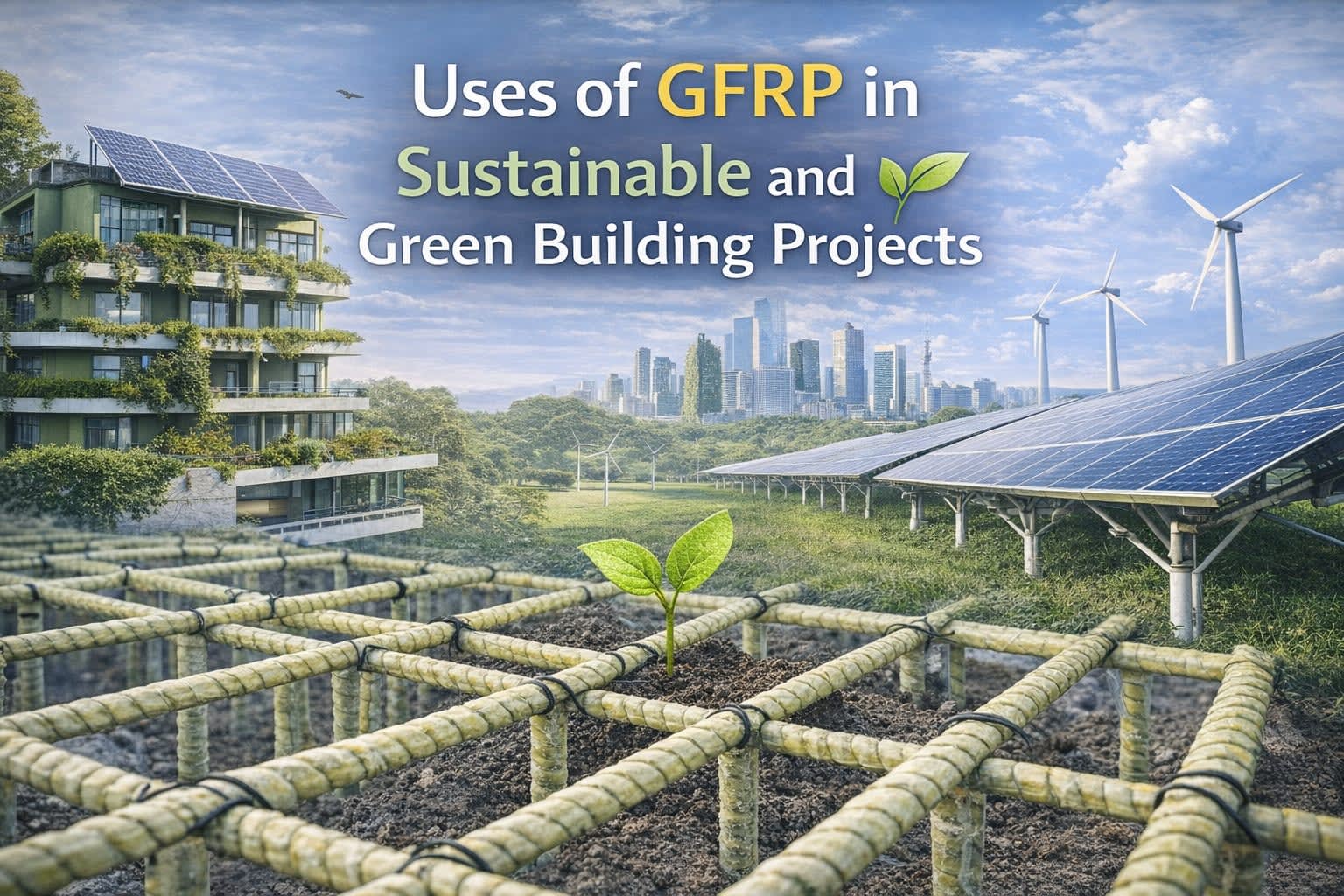
Glass Fibre Reinforced Polymer (GFRP) is emerging as a transformative material in green infrastructure. By eliminating corrosion, reducing maintenance, and extending service life, GFRP directly supports sustainable building goals.
At Rebarx, we manufacture high-performance glass fibre reinforcement bars designed to align with modern sustainable construction standards. This article explores how GFRP contributes to environmentally responsible building projects.
What Defines a Sustainable Building?
A sustainable or green building focuses on:
- Reduced carbon footprint
- Long service life
- Lower maintenance requirements
- Efficient material usage
- Minimal environmental degradation
While energy efficiency often receives the most attention, structural durability is equally important. A building that requires frequent repairs or early replacement cannot be considered truly sustainable.
This is where GFRP plays a vital role.
1. Corrosion Resistance Extends Structural Lifespan
One of the biggest sustainability challenges in reinforced concrete structures is corrosion.
Steel reinforcement corrodes over time, leading to:
- Concrete cracking
- Structural weakening
- Expensive repairs
- Increased material waste
By contrast, glass fibre reinforcement bars are completely resistant to corrosion. They do not rust, even in humid, coastal, or chemically aggressive environments.
This corrosion immunity significantly extends the service life of structures, reducing:
- Resource consumption
- Demolition waste
- Repair-related emissions
Longer lifespan directly supports green building certification goals.
2. Lower Lifecycle Carbon Footprint
Sustainability is measured not just by initial material production, but by lifecycle environmental impact.
Traditional steel-reinforced structures often require:
- Rebar replacement
- Concrete rehabilitation
- Protective coatings
- Periodic structural strengthening
Each repair cycle adds to carbon emissions.
GFRP minimizes these interventions. Because it does not corrode, maintenance frequency decreases dramatically, lowering the overall lifecycle carbon footprint of the structure.
For green infrastructure planners, this makes GFRP an environmentally responsible reinforcement option.
3. Lightweight Material Reduces Structural Load
GFRP is up to 75% lighter than steel. This lightweight property offers several sustainability advantages:
- Reduced transportation fuel consumption
- Lower structural dead load
- Optimized foundation design
- Reduced concrete usage in some applications
By decreasing material intensity, GFRP supports efficient resource utilization — a core principle of sustainable construction.
4. Ideal for Renewable Energy Infrastructure
Green building projects often include renewable energy facilities such as:
- Solar farms
- Wind turbine foundations
- Hydro infrastructure
GFRP’s non-conductivity and non-magnetism make it especially suitable for renewable energy installations.
Unlike steel, it does not interfere with electromagnetic systems, making it ideal for:
- Solar panel mounting structures
- Electrical substations
- Energy storage facilities
Using glass fibre reinforcement bars enhances both structural durability and system efficiency.
5. Durability in Aggressive Environments
Many sustainable projects are located in environmentally sensitive or challenging areas, including:
- Coastal eco-resorts
- Waterfront developments
- Wastewater treatment plants
- Underground green infrastructure
Steel corrosion in such environments leads to premature failure.
GFRP provides long-term durability without environmental degradation caused by rust expansion and concrete spalling. This ensures structural stability while protecting surrounding ecosystems.
6. Reduced Use of Protective Chemicals
To combat corrosion in steel reinforcement, projects often rely on:
- Epoxy coatings
- Cathodic protection systems
- Corrosion inhibitors
These treatments require additional materials, chemicals, and energy.
GFRP eliminates the need for such protective measures, reducing chemical usage and simplifying sustainable construction processes.
7. Contribution to Green Building Certifications
Many sustainable projects aim for certifications such as LEED or GRIHA. Material durability, lifecycle performance, and reduced environmental impact are key evaluation factors.
By using corrosion-resistant reinforcement like GFRP, projects can:
- Improve durability credits
- Reduce lifecycle maintenance impact
- Support sustainable material selection
Experienced manufacturers like Rebarx help project planners integrate GFRP into green design strategies effectively.
Applications of GFRP in Green Building Projects
GFRP is widely used in:
- Sustainable residential complexes
- Green commercial buildings
- Eco-friendly bridges and walkways
- Rainwater harvesting structures
- Underground water tanks
- Parking structures exposed to de-icing salts
As sustainability becomes a central focus in construction, demand for advanced reinforcement solutions continues to grow.
Why Choose Rebarx for Sustainable Projects?
At Rebarx, sustainability and performance go hand in hand.
We manufacture premium-quality glass fibre reinforcement bars engineered to meet modern durability and environmental standards.
Our advantages include:
- Advanced manufacturing processes
- Strict quality testing
- Consistent tensile strength performance
- Reliable supply chain
- Technical support for green infrastructure projects
By choosing Rebarx, developers and contractors gain a reinforcement partner committed to long-term structural sustainability.
The Future of Sustainable Reinforcement
As climate change, urbanization, and environmental regulations intensify, the construction industry must adopt smarter materials.
GFRP is not merely an alternative to steel — it represents a forward-thinking approach to durable and environmentally responsible infrastructure.
Green buildings require materials that last longer, require fewer repairs, and reduce environmental impact across their lifecycle. GFRP delivers precisely that.
Conclusion
Sustainable construction demands more than energy efficiency — it requires structural durability that minimizes environmental impact over decades.
By eliminating corrosion, reducing maintenance cycles, lowering carbon emissions, and supporting renewable infrastructure, GFRP has become an essential material in green building projects.
For developers committed to long-term performance and environmental responsibility, Rebarx provides high-quality glass fibre reinforcement bars designed to meet the evolving demands of sustainable construction.
Frequently Asked Questions (FAQs)
1. Is GFRP environmentally friendly?
Yes. Its corrosion resistance and long lifespan reduce maintenance-related emissions and material waste.
2. Can GFRP help achieve green building certifications?
Yes. Its durability and lifecycle performance contribute positively toward sustainability credits.
3. Does GFRP reduce carbon footprint?
By minimizing repairs and extending service life, it lowers the overall lifecycle carbon footprint of a structure.
4. Is GFRP suitable for renewable energy projects?
Yes. Its non-conductive and non-magnetic properties make it ideal for solar and power infrastructure.
5. Why choose Rebarx for sustainable construction?
Rebarx offers high-performance, quality-tested glass fibre reinforcement bars tailored for long-lasting, eco-friendly infrastructure.