
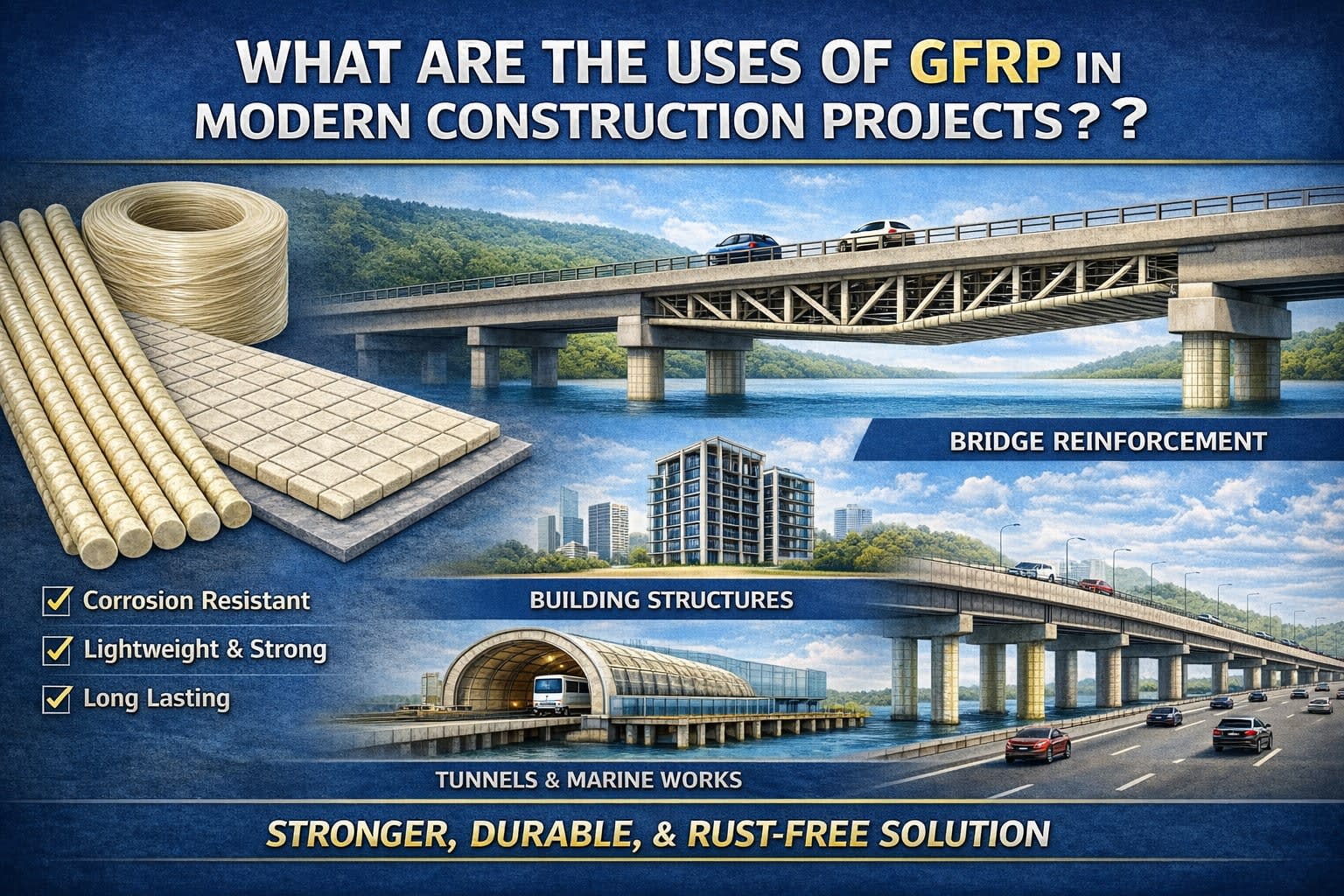
Modern construction is changing fast. Steel is no longer the only hero on the job site. Engineers, architects, and contractors are now turning to smarter, lighter, and longer-lasting materials that reduce maintenance costs while boosting performance.
One material leading this transformation is Glass Fiber Reinforced Polymer (GFRP).
From bridges and highways to marine structures and high-rise buildings, GFRP is redefining durability and efficiency. And that’s exactly why leading GFRP manufacturers like RebarX are seeing huge demand across infrastructure and commercial projects.
So, where exactly is GFRP used in modern construction?
Let’s break it down in simple, practical terms.
What is GFRP? (Quick Refresher)
GFRP (Glass Fiber Reinforced Polymer) is a composite material made by combining:
- High-strength glass fibers
- Polymer resin
This combination creates reinforcement that is:
- Corrosion-free
- Lightweight
- High tensile strength
- Non-magnetic
- Non-conductive
- Long-lasting
In short, it solves many problems that traditional steel reinforcement creates.
Why Construction is Moving Away from Steel
Steel has been the standard for decades, but it comes with drawbacks:
- Rust and corrosion
- Heavy weight
- High maintenance
- Shorter lifespan in harsh environments
- Expensive repairs over time
GFRP eliminates most of these issues.
That’s why smart contractors are now choosing products from reliable GFRP manufacturers to future-proof their projects.
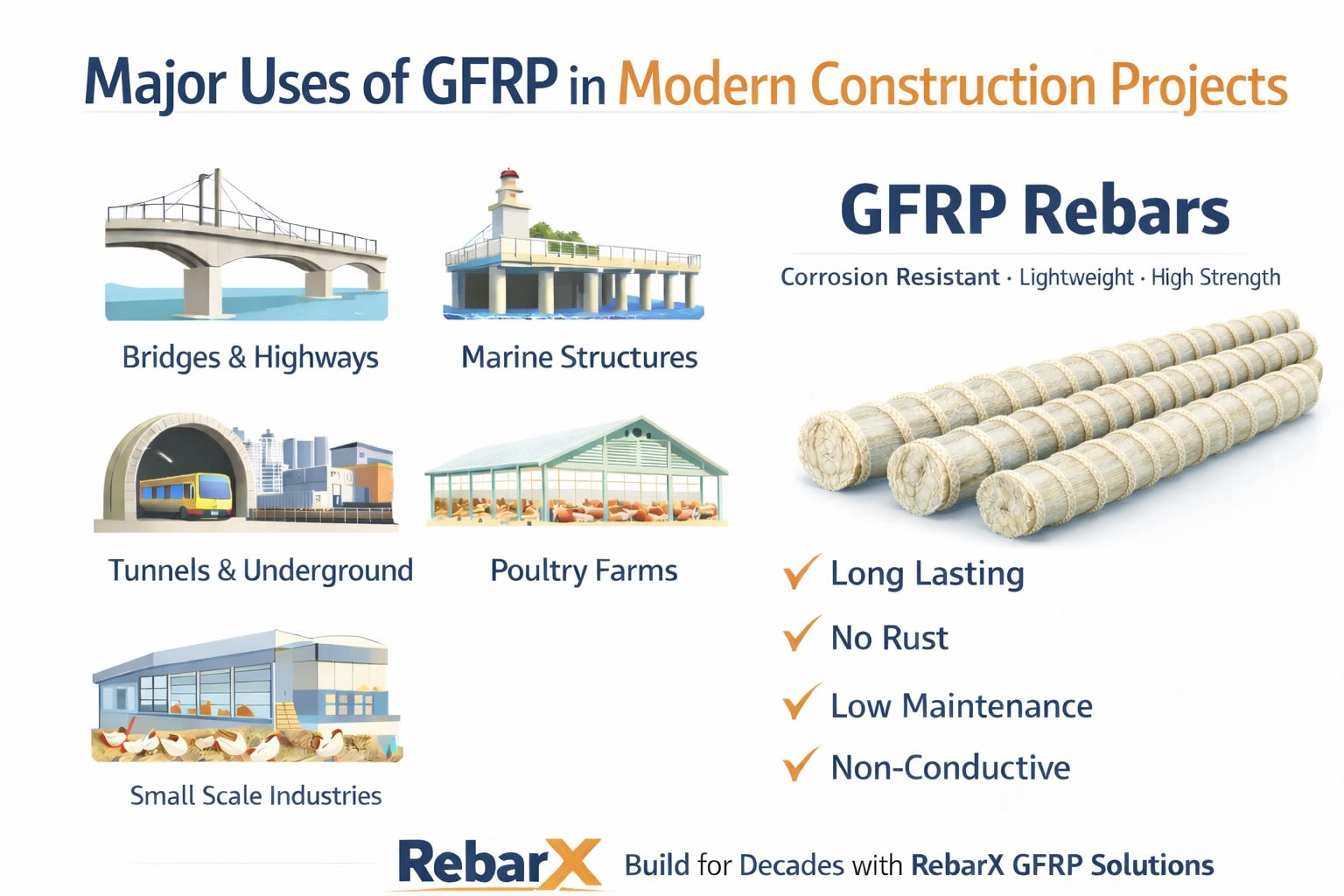
Major Uses of GFRP in Modern Construction Projects
Let’s explore the most common and profitable applications.
1. GFRP Rebars for Concrete Reinforcement
This is the most popular use.
Instead of steel rebars, engineers use GFRP rebars to reinforce concrete structures.
Where it’s used:
- Slabs
- Columns
- Foundations
- Parking decks
- Industrial floors
Benefits:
- No rust
- 2–4x longer lifespan
- Lightweight handling
- Lower maintenance cost
For contractors, this means faster installation and fewer callbacks.
For clients, it means durability.
That’s a win-win.
2. Bridges and Flyovers
Bridges are highly exposed to:
- Moisture
- Chemicals
- Salt
- Temperature changes
Steel corrodes quickly here.
Why GFRP works better:
- 100% corrosion resistant
- Reduced repair costs
- Longer structural life
- Lower lifecycle cost
Many infrastructure departments now specify GFRP reinforcement from trusted GFRP manufacturers for bridge decks and retaining walls.
3. Marine and Coastal Structures
Saltwater is steel’s biggest enemy.
Ports, jetties, docks, and seawalls suffer rapid corrosion when reinforced with steel.
GFRP advantages:
- Saltwater proof
- Zero rust
- Minimal maintenance
- Ideal for humid environments
Using GFRP here drastically reduces repair budgets and extends service life.
4. Roadways and Pavements
Highways and pavements experience:
- Heavy loads
- Water seepage
- Chemical exposure
Steel reinforcement eventually weakens.
Why contractors choose GFRP:
- Longer crack resistance
- Lightweight for fast installation
- Lower lifecycle cost
Governments are increasingly demanding GFRP-based reinforcement for smarter infrastructure planning.
5. Parking Structures and Basements
Parking garages face constant:
- Water leakage
- De-icing salts
- Humidity
These conditions destroy steel quickly.
GFRP benefits:
- No corrosion
- Lower maintenance
- Extended lifespan
- Reduced structural repairs
Property developers save big on maintenance budgets over 20–30 years.
6. Industrial Plants and Chemical Zones
Factories and chemical plants expose materials to:
- Acids
- Alkalis
- Harsh chemicals
Steel struggles here.
GFRP performs better because:
- Chemical resistant
- Electrically non-conductive
- Low maintenance
That’s why warehouses, refineries, and processing plants rely on products from professional GFRP manufacturers.
7. Hospitals and MRI Rooms
This is an interesting use that many people don’t know.
Steel interferes with magnetic equipment like MRI machines.
GFRP advantages:
- Non-magnetic
- Non-conductive
- Safe for sensitive equipment
Perfect for healthcare facilities and labs.
8. Tunnels and Underground Structures
Tunnels demand materials that last decades without heavy repairs.
Why GFRP works:
- No rust underground
- Lightweight transport
- Easy installation
- Reduced long-term maintenance
Metro projects and underground parking structures are rapidly adopting it.
9. Precast and Modular Construction
Precast structures benefit from lightweight materials.
Benefits of GFRP:
- Easier lifting
- Lower transport cost
- Faster assembly
- Reduced labor
This improves project timelines significantly.
10. Architectural and Façade Elements
GFRP is not only strong — it’s flexible in design.
Used for:
- Cladding panels
- Decorative elements
- Lightweight structural parts
Architects love it because it allows creative shapes without adding heavy loads.
Why Choosing the Right GFRP Manufacturers Matters
Not all GFRP products are equal.
Poor quality materials can lead to:
- Reduced strength
- Installation issues
- Lower lifespan
That’s why working with experienced GFRP manufacturers is critical.
Look for:
- Certified quality
- Consistent strength
- Technical support
- Custom solutions
- On-time supply
Why RebarX is a Smart Choice for GFRP Solutions
If you’re looking for dependable reinforcement materials, RebarX delivers:
- High-strength GFRP rebars
- Corrosion-free performance
- Competitive pricing
- Reliable supply chain
- Expert guidance
Whether you’re building bridges, factories, or commercial spaces, RebarX helps you make once and build for decades.
Because modern construction isn’t just about cost — it’s about lifespan and reliability.
Conclusion
Construction is moving toward smarter, more sustainable materials. And GFRP is clearly leading that shift.
From bridges and marine structures to hospitals and industrial plants, the applications are growing every year.
If you want stronger structures, fewer repairs, and better long-term savings, partnering with reliable GFRP manufacturers like RebarX is the right move.
Because the future of construction isn’t steel.
It’s composite.
And it’s here.
FAQs
1. What is GFRP used for in construction?
It’s mainly used for concrete reinforcement, bridges, marine structures, pavements, and industrial buildings.
2. Is GFRP stronger than steel?
GFRP has higher tensile strength and better corrosion resistance than steel.
3. Does GFRP rust?
No. It is 100% corrosion-free.
4. Are GFRP rebars lightweight?
Yes, they are about 70–75% lighter than steel.
5. Where can I buy quality GFRP reinforcement?
You can source high-quality products from trusted GFRP manufacturers like RebarX.
that