
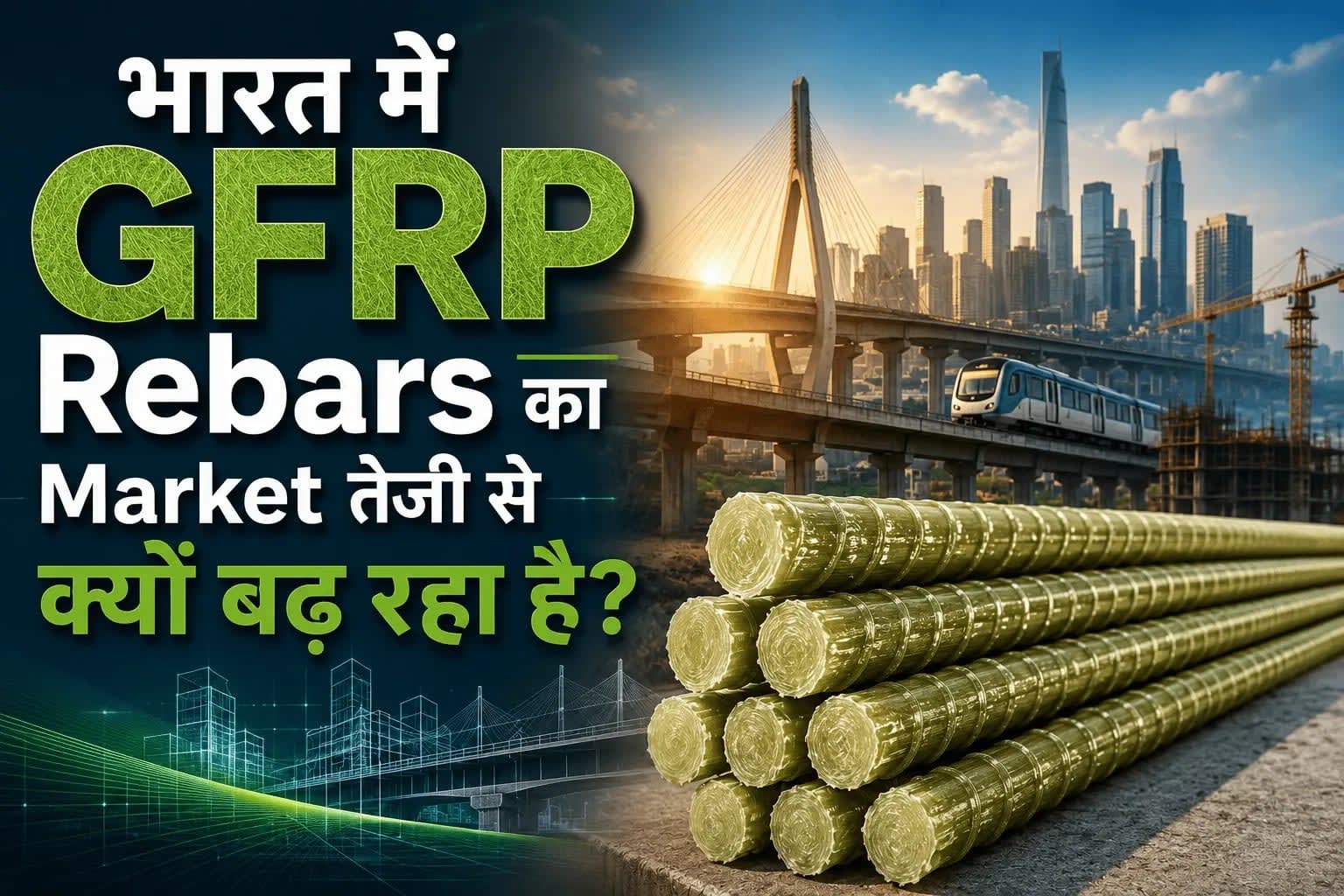
GFRP Rebars are quietly becoming one of the most talked-about materials among infrastructure engineers working on smart city projects. And honestly, the attention is well-deserved. As cities push to build smarter transportation systems, more resilient utilities, and infrastructure that can actually last — the materials being used to build all of this have to keep up.
For decades, steel reinforcement was the default choice. It worked, and it still does in many contexts. But anyone who's worked on a water treatment facility or a metro tunnel knows the headaches that come with corrosion, rising maintenance bills, and concrete that starts cracking before the project even hits its halfway life. That's the gap Glass Fiber Reinforced Polymer (GFRP) rebars are stepping into.
Why Are Smart Cities Looking Beyond Traditional Steel Reinforcement?
Smart cities aren't just about sensors and data dashboards — they're about infrastructure that can quietly do its job for 50, 60, 70 years without constant intervention. That's why GFRP rebars are becoming the material of choice for bridges, metro tunnels, water treatment plants, and underground corridors — structures that simply can't afford emergency repairs every decade.
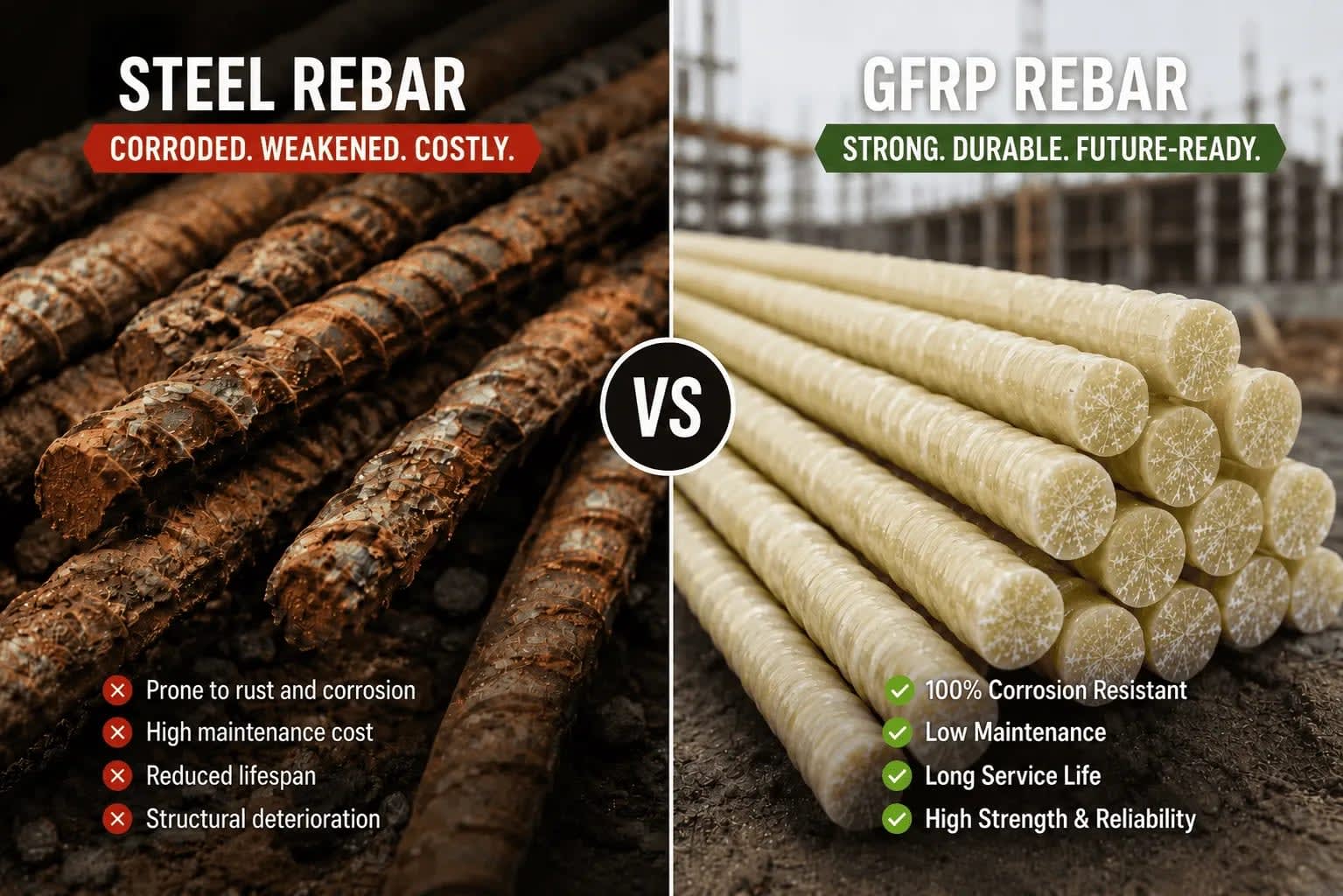
Steel's biggest weakness in these environments is simple: it rusts. And when it rusts inside concrete, it expands, creates internal pressure, and eventually cracks the very structure it was meant to hold together. For city planners, that means unplanned budgets, traffic disruptions, and structures that age faster than they should.
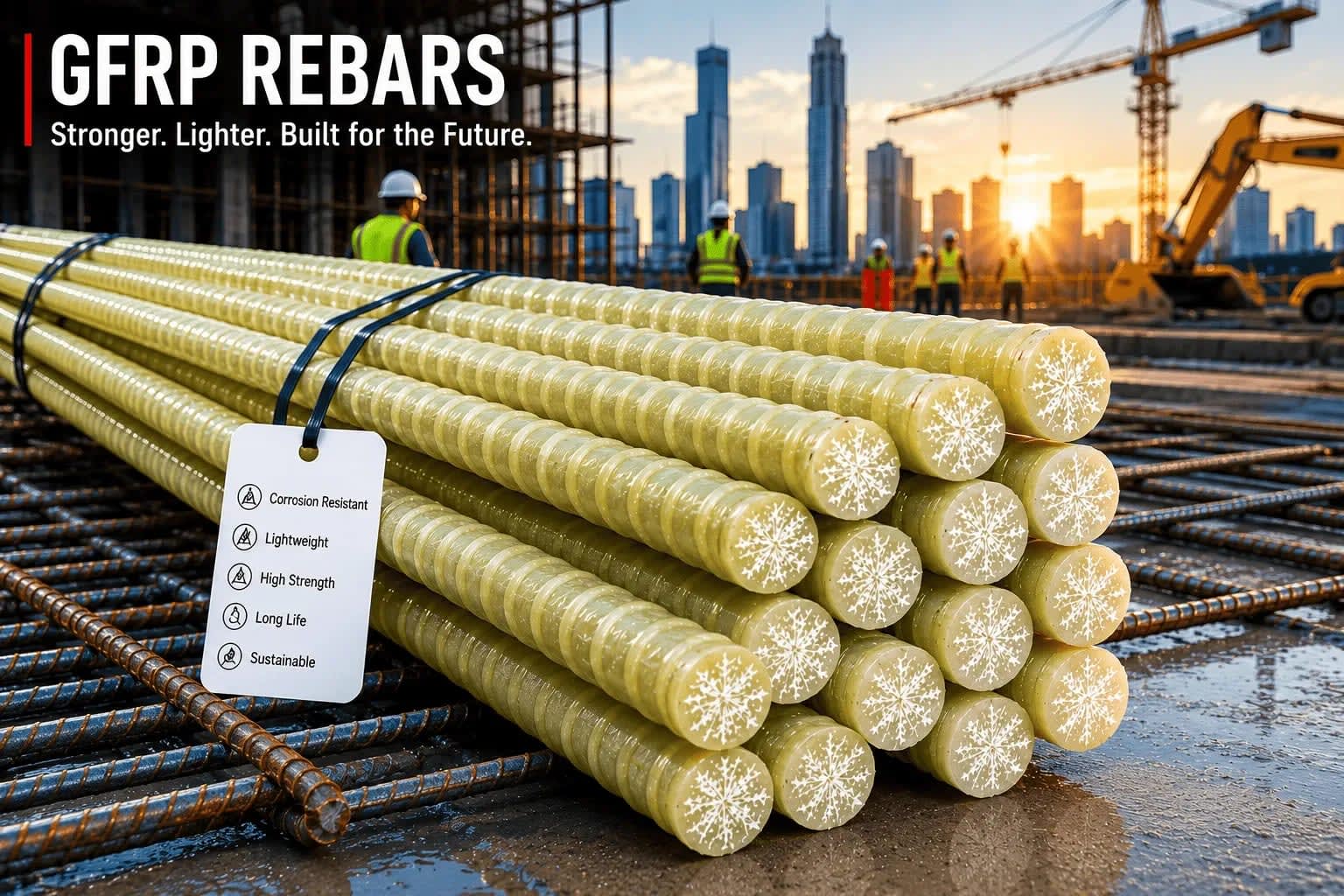
Glass fiber reinforced polymer rebars are built differently. Made from high-strength glass fibers embedded in a polymer matrix, they are fundamentally immune to the corrosion cycle that degrades steel — they don't rust, they don't expand inside concrete, and they don't trigger the cracking patterns that cut decades off a structure's useful life. The result is reinforcement that consistently delivers:
- Excellent corrosion resistance.
- High tensile strength.
- Lightweight handling.
- Longer service life.
- Reduced maintenance requirements.
How Do GFRP Rebars Improve Infrastructure Durability?
Here's the core problem with urban construction: structures are constantly exposed to moisture, de-icing salts, industrial chemicals, and seasonal temperature swings. Steel doesn't handle that combination particularly well over time.
When steel corrodes inside concrete, the rust expansion creates internal pressure that eventually fractures the surrounding concrete. GFRP rebars eliminate this concern because they simply don't rust — not in saltwater, not in chemically aggressive soils, not in humid underground environments.
Key Benefits for Smart City Infrastructure
✔ Bridges exposed to weather conditions.
✔ Coastal infrastructure facing saltwater exposure.
✔ Underground tunnels and utility corridors.
✔ Water treatment and wastewater facilities.
✔ Smart transportation networks.
When structures last longer before needing major repairs, cities can redirect those maintenance budgets toward new projects rather than patching old ones.
The Connection Between Sustainability and GFRP in Construction
Sustainability in infrastructure isn't just about what materials are made from — it's also about how often they need to be replaced. A structure that holds up for 80 years without major intervention has a fundamentally different environmental footprint than one that needs reconstruction every 30.
The growing adoption of GFRP in construction supports sustainability objectives in a practical, measurable way not just in terms of embodied carbon, but in reduced repair frequency, fewer replacement materials consumed, and less construction activity disrupting urban environments over time.
Sustainable Outcomes
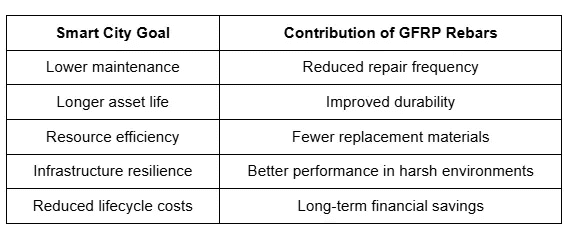
When cities are serious about sustainable growth, not just on paper durable materials like GFRP become a core part of that conversation.
Can GFRP Rebars Support Smart Transportation Networks?
Absolutely.
Transportation infrastructure is where smart city investments hit the hardest. Roads, flyovers, metro tunnels, elevated corridors — these assets carry enormous loads, face constant environmental exposure, and can't easily be taken offline for repairs.
GFRP rebars are a good fit here for reasons that go beyond corrosion resistance:
Why Transportation Engineers Prefer Them
- High strength-to-weight ratio.
- Easier transportation and installation.
- Corrosion resistance in exposed environments.
- Lower maintenance interruptions.
- Improved service life of critical assets.
For city planners, the practical benefit is straightforward: fewer maintenance closures mean less disruption to the millions of people and businesses that depend on these systems every day.
What Makes GFRP Material Ideal for Future-Ready Urban Projects?
Part of what makes GFRP material a compelling choice for next-generation infrastructure is how well its properties map onto the actual demands of modern urban environments — not just in theory, but in practice.
Important Characteristics
High Strength
GFRP rebars deliver strong tensile performance, which is why they're increasingly being specified for structurally demanding applications not just as a niche alternative.
Lightweight Construction
The weight reduction compared to steel is significant. On large sites, that translates to easier handling, faster installation, and lower logistics costs.
Non-Corrosive Nature
This is the headline property — GFRP isn't affected by moisture, chlorides, or most chemicals that eat through steel over time.
Extended Service Life
In environments where steel would require intervention within a few decades, GFRP-reinforced structures tend to maintain their integrity significantly longer.
These aren't abstract advantages. For engineers specifying materials on infrastructure meant to serve cities for generations, they're the kind of properties that justify a serious look.
Understanding the Expanding GFRP Uses Across Smart Cities
The applications for GFRP uses have grown considerably as more engineers gain hands-on experience with the material and build confidence in its long-term performance.
Today, these rebars are being considered for:
- Smart bridges.
- Metro rail infrastructure.
- Parking structures.
- Water management systems.
- Industrial facilities.
- Utility tunnels.
- Renewable energy projects.
That's a broad range and it reflects a material that has moved well beyond niche applications into mainstream infrastructure planning.
How Can GFRP Rebars Shape the Future of Smart Cities?
A smart city isn't just a city with better technology layered on top of aging concrete. It's one where the physical infrastructure itself is built to support long-term performance without constantly pulling resources toward repair and rehabilitation.
1. Building More Resilient Infrastructure
Resilient infrastructure holds up under environmental stress, heavy usage, and the unpredictable demands of a growing urban population. GFRP rebars contribute to this by meaningfully reducing the deterioration risks that shorten structural lifespans.
2. Reducing Long-Term Maintenance Costs
Infrastructure maintenance is one of the largest ongoing expenses for any municipality. When corrosion-related repairs are minimized from the start, the lifecycle cost picture changes significantly and those savings compound over decades.
Both of these outcomes point toward smarter infrastructure investment, which is exactly what smart city development is supposed to deliver.
Conclusion
The case for GFRP in smart city infrastructure isn't complicated: cities need structures that last, don't drain maintenance budgets, and hold up in the kinds of environments where traditional steel struggles. GFRP rebars check all of those boxes.
As urban populations grow and infrastructure demands continue to intensify, advanced reinforcement solutions are going to be part of how engineers answer those challenges. For developers and planners starting to explore this space, working with established rebar manufacturers in India who understand the material's specifications and application requirements is a practical first step toward building infrastructure that's genuinely built for the long term.
FAQs
1. Why are GFRP rebars used in smart city projects? GFRP rebars offer high strength, corrosion resistance, and long-term durability, making them ideal for smart city infrastructure that requires minimal maintenance.
2. Can GFRP rebars be used in bridges and metro projects? Yes. GFRP rebars are widely used in bridges, tunnels, metro systems, and other infrastructure exposed to moisture, chemicals, and harsh environments.
3. How do GFRP rebars reduce maintenance costs? Since GFRP rebars do not rust or corrode like steel, they help prevent concrete damage and reduce the need for frequent repairs.
4. What are the main benefits of GFRP material? GFRP material is lightweight, corrosion-resistant, high-strength, and designed to provide a longer service life than traditional reinforcement options.
5. Are GFRP rebars a sustainable construction solution? Yes. Their long lifespan and reduced maintenance requirements help lower material consumption and support sustainable infrastructure development.