
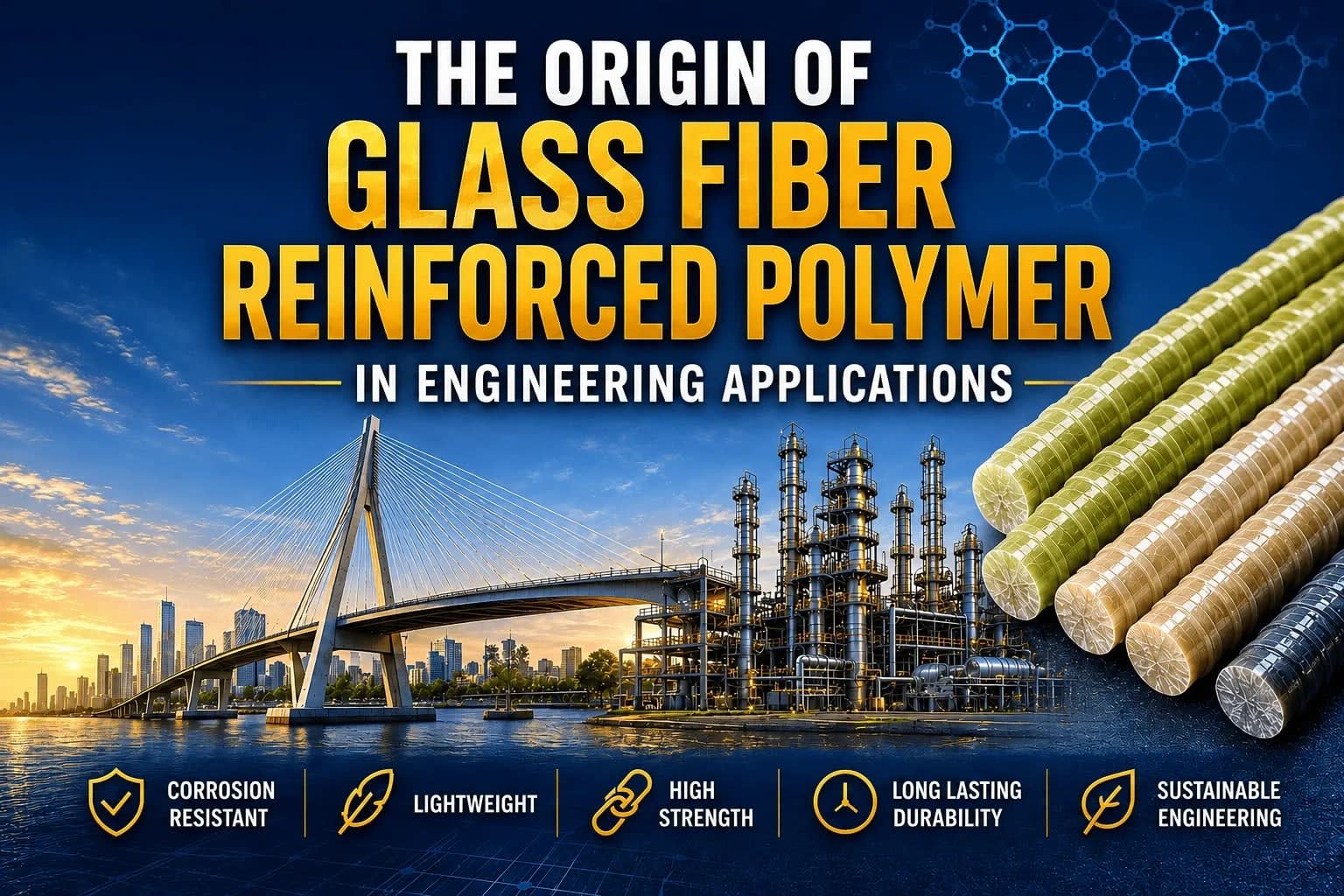
Modern engineering and construction industries are constantly searching for materials that can deliver higher durability, better structural performance, and longer service life. One material that has completely transformed infrastructure development is Glass Fiber Reinforced Polymer (GFRP).
Today, GFRP materials are widely used in bridges, highways, industrial plants, transportation systems, marine structures, and commercial buildings because of their lightweight nature and exceptional resistance to environmental damage. Unlike traditional reinforcement systems, glass fiber reinforced polymer rebar provide long-term reliability even in highly corrosive environments.
Over the years, Fiber Reinforced Polymer technology evolved from experimental composite research into one of the most trusted engineering solutions worldwide. This evolution reflects the growing demand for stronger, corrosion-resistant, and sustainable construction materials.
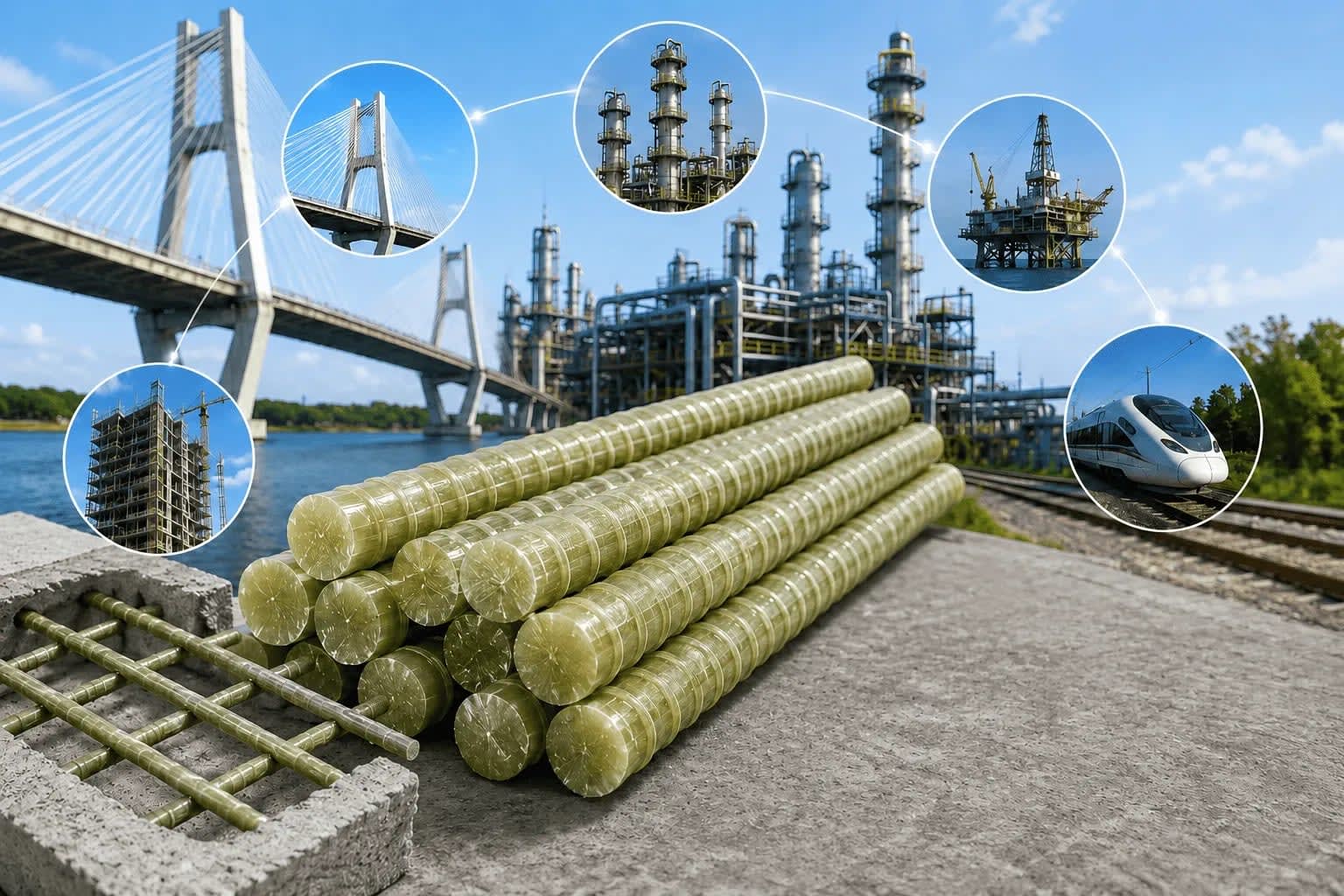
What is Glass Fiber Reinforced Polymer?
Glass Fiber Reinforced Polymer is a composite material created by combining reinforcing fibers with a polymer resin matrix.
The fibers provide:
- Structural strength.
- Load-bearing capability.
- Mechanical stability.
The polymer resin helps in:
- Binding the fibers together.
- Protecting against environmental exposure.
- Improving durability.
Key Characteristics of GFRP Materials
- High tensile strength.
- Excellent corrosion resistance.
- Lightweight structure.
- Reduced maintenance requirements.
- Long operational lifespan.
Because of these advantages, GFRP materials are now considered an advanced alternative to conventional steel reinforcement in modern infrastructure projects.
Early Development of Composite Materials
The origin of composite engineering can be traced back to the early 20th century when industries started exploring alternatives to heavy and corrosion-prone metals.
At that time, traditional materials such as steel and aluminum faced several limitations:
- Rust and corrosion damage.
- High maintenance costs.
- Increased structural weight.
- Reduced lifespan in harsh environments.
Researchers realized that combining multiple materials could create stronger and more efficient structural systems.
Major Breakthrough During the 1930s
The development of fiberglass technology became a turning point in engineering history.
Scientists discovered that:
- Thin glass fibers could provide excellent strength.
- Resin systems could improve durability.
- Composite structures could remain lightweight while maintaining performance.
This innovation laid the foundation for modern Fiber Reinforced Polymer technology.
Role of Aerospace Engineering in GFRP Development
The aerospace industry played a major role in accelerating the growth of composite materials.
During the 1930s and 1940s, aircraft manufacturers faced major challenges related to:
- Aircraft weight.
- Fuel efficiency.
- Structural performance.
Engineers needed materials that could maintain strength without increasing overall load.
Why Aerospace Industries Adopted Composite Materials
- High strength-to-weight ratio.
- Better corrosion resistance.
- Improved durability.
- Enhanced structural efficiency.
Early Aerospace Applications Included
- Aircraft interiors.
- Structural support panels.
- Radar systems.
- Lightweight body components.
The successful use of composite materials in aviation encouraged further research into advanced reinforcement technologies.
Expansion into Marine Engineering
After aerospace success, composite technology rapidly entered the marine industry.
Traditional steel structures used in coastal and offshore environments frequently suffered from severe corrosion because of continuous saltwater exposure.
Marine engineers recognized that GFRP materials could provide:
- Better corrosion protection.
- Lower maintenance costs.
- Lightweight installation benefits.
- Longer service life.
Marine Applications of Composite Technology
- Boats and vessels.
- Offshore platforms.
- Coastal infrastructure.
- Marine structural systems.
This adoption proved that Fiber Reinforced Polymer materials could perform effectively even in highly aggressive environmental conditions.
Growth of GFRP in Industrial Engineering
As manufacturing technologies improved, composite materials gained popularity across industrial sectors.
Industries operating in chemically aggressive environments required materials capable of resisting:
- Chemical exposure.
- Moisture damage.
- Environmental deterioration.
- Structural corrosion.
Industrial Applications of GFRP
- Chemical processing plants.
- Water treatment facilities.
- Cooling towers.
- Storage tanks.
- Industrial pipelines.
Key Benefits in Industrial Environments
- Non-corrosive performance.
- Improved durability.
- Reduced operational downtime.
- Lower repair expenses.
The industrial sector played an important role in proving the long-term reliability of composite engineering systems.
Introduction of GFRP in Civil Engineering
Civil engineering became one of the most important sectors for the adoption of Fiber Reinforced Polymer technology.
Traditional reinforced concrete structures often experienced deterioration because steel reinforcement gradually corroded over time.
Common causes of structural damage included:
- Moisture penetration.
- Chloride exposure.
- Chemical attacks.
- Coastal environmental conditions.
During the 1960s and 1970s, engineers started experimenting with composite reinforcement systems in infrastructure projects.
Civil Infrastructure Applications
- Bridges
- Highways
- Parking structures
- Tunnels
- Retaining walls
- Seawalls
The corrosion-resistant nature of GFRP materials made them increasingly valuable for long-lasting infrastructure development.
Development of Reinforcement Systems
One of the biggest advancements in composite engineering was the development of reinforcement systems for concrete structures.
Unlike traditional steel reinforcement, composite rebars do not rust when exposed to moisture or chemicals.
Advantages of Composite Reinforcement Systems
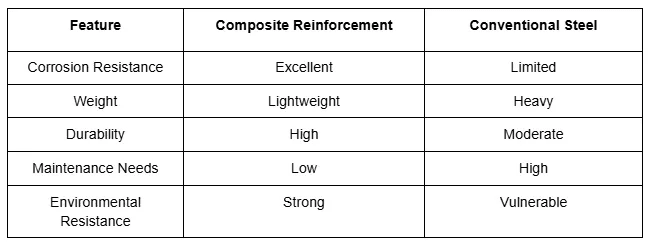
Today, many rebar manufacturers in India are investing in advanced composite manufacturing technologies to support modern infrastructure requirements.
Why Engineers Prefer GFRP Materials
The popularity of GFRP technology continues to grow because of its engineering advantages.
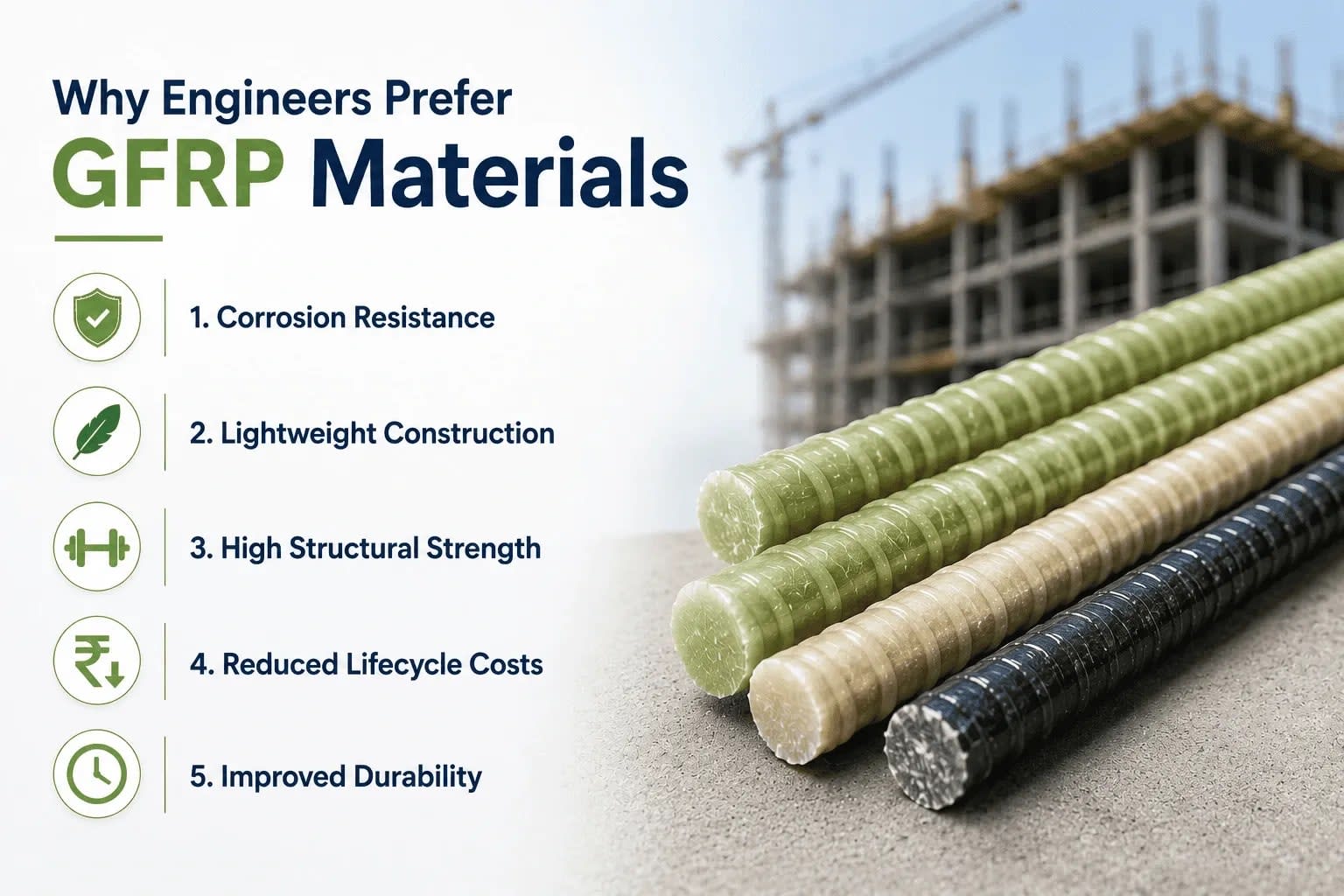
Major Benefits of GFRP
1. Corrosion Resistance
Composite materials resist rust and environmental deterioration far better than traditional steel.
2. Lightweight Construction
Lower weight helps simplify transportation, handling, and installation.
3. High Structural Strength
GFRP materials provide excellent tensile performance in demanding environments.
4. Reduced Lifecycle Costs
Longer lifespan and lower maintenance needs help reduce infrastructure expenses.
5. Improved Durability
Structures reinforced with composite materials can remain operational for extended periods.
These benefits have made GFRP a preferred material for modern infrastructure projects worldwide.
Modern Applications of GFRP Technology
Today, Fiber Reinforced Polymer technology is used across multiple engineering sectors.
Common Modern Applications
Civil Infrastructure
- Bridges
- Metro systems
- Flyovers
- Parking facilities
Transportation Engineering
- Railway components
- Automotive structures
- Aircraft systems
Industrial Engineering
- Processing facilities
- Chemical storage systems
- Structural support components
Marine Infrastructure
- Offshore structures
- Coastal protection systems
- Port facilities
The increasing use of composite materials reflects the global demand for durable and sustainable infrastructure solutions.
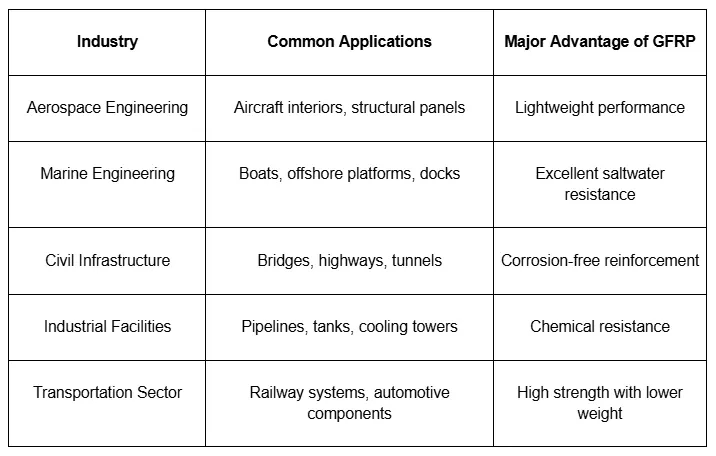
Comparison of GFRP Applications Across Industries
The Role of GFRP in Sustainable Engineering
Sustainability has become a major focus in infrastructure development worldwide.
Composite technology supports sustainable construction because it helps:
- Extend structural lifespan.
- Reduce maintenance frequency.
- Minimize repair requirements.
- Improve construction efficiency.
Sustainability Advantages
- Lower lifecycle costs.
- Reduced material replacement.
- Enhanced infrastructure durability.
- Better long-term performance.
Because of these advantages, GFRP materials are becoming increasingly important in future-ready engineering projects.
Future of Fiber Reinforced Polymer Technology
The future of Fiber Reinforced Polymer technology looks highly promising as industries continue investing in advanced material research.
Researchers are currently working on:
- Stronger reinforcement fibers.
- Improved resin systems.
- Sustainable production techniques.
- Recyclable composite solutions.
- Hybrid reinforcement technologies.
Future Industry Trends
- Smart infrastructure systems.
- Sustainable transportation projects.
- High-performance reinforcement materials.
- Advanced composite manufacturing.
As global infrastructure demands continue rising, composite engineering solutions are expected to play an even larger role in construction and industrial development.
Conclusion
The origin of Glass Fiber Reinforced Polymer technology represents a major milestone in the evolution of modern engineering materials. What began as experimental fiberglass research eventually transformed into a globally trusted infrastructure solution.
From aerospace engineering and marine applications to industrial facilities and civil infrastructure, GFRP technology has consistently solved critical challenges related to corrosion, weight, and durability.
Today, composite materials continue shaping the future of sustainable and long-lasting infrastructure by offering stronger performance, reduced maintenance requirements, and improved structural reliability.
FAQs
Q1. What are the properties of glass reinforced polymers? Glass reinforced polymers are lightweight, corrosion-resistant, and highly durable materials. They offer excellent tensile strength, electrical insulation, and resistance to moisture and chemicals. These properties make them suitable for demanding engineering and construction applications.
Q2. What are the advantages of GFRP? GFRP provides several advantages, including corrosion resistance, low maintenance, and lightweight installation. It also offers high strength and a longer service life compared to traditional steel reinforcement. These benefits help improve the durability and efficiency of infrastructure projects.
Q3. What is the material structure of GFRP? GFRP is made by combining glass fibers with a polymer resin matrix. The glass fibers provide strength and stiffness, while the resin binds the fibers together and protects them from environmental damage. This combination creates a strong and durable composite material.