
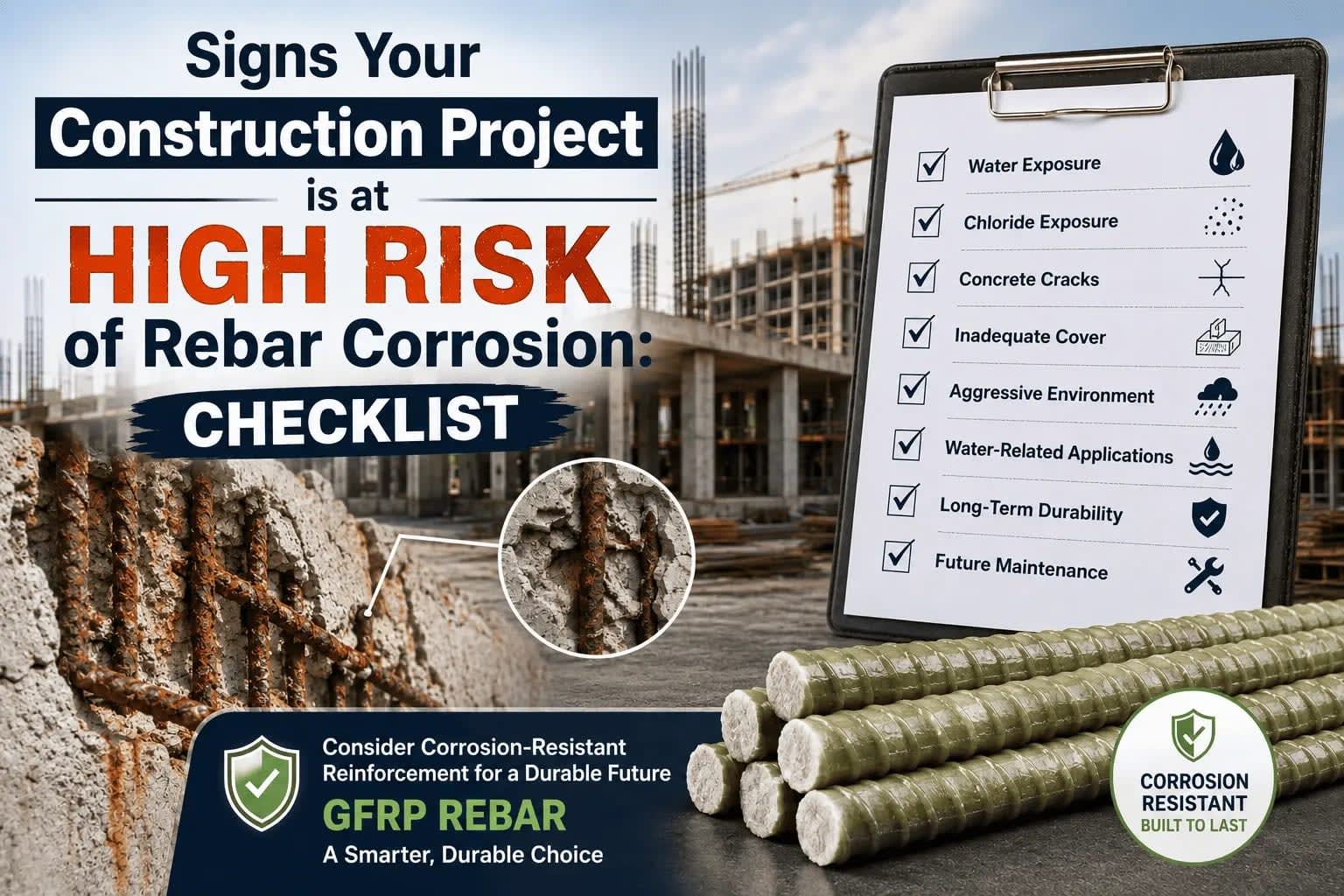
Rebar corrosion can quietly weaken a reinforced concrete structure long before serious damage becomes visible. But how can you tell if your construction project is at high risk of rebar corrosion? Moisture exposure, chloride penetration, concrete cracks, inadequate cover, and poor concrete quality are some of the biggest warning signs.
Is Your Construction Project at Risk of Rebar Corrosion?
A construction project is at high risk of rebar corrosion when reinforcement is exposed to moisture, chlorides, cracks, poor-quality concrete, or insufficient concrete cover. Coastal structures, bridges, water infrastructure, foundations, and other projects in aggressive environments need extra protection. Using corrosion-resistant reinforcement such as GFRP Rebar can help reduce corrosion-related risks.
What Should Your Rebar Corrosion-Risk Checklist Include?
Before selecting reinforcement for a construction project, assess the following factors to understand the potential risk of rebar corrosion:
- Water exposure: Is the structure regularly exposed to water, moisture, or waterlogged conditions?
- Chloride exposure: Could seawater, saline soil, or other chloride sources reach the reinforcement?
- Concrete cracking: Are cracks likely to allow moisture and aggressive substances to reach the reinforcement?
- Concrete cover: Is the specified concrete cover adequate for the project's exposure conditions?
- Aggressive environment: Is the project located in a coastal, marine, humid, or chemically aggressive environment?
- Water-related applications: Is the structure being built for water treatment, wastewater, drainage, tanks, or similar applications?
- Long-term durability: Does the project require reinforcement that can provide long-term performance with minimal corrosion concerns?
- Future maintenance: Could reinforcement-related repairs and maintenance become difficult or costly over the structure's service life?
How Can GFRP Rebar Help Address These Risks?
When corrosion is a significant project concern, glass fibre reinforcement bars can be considered as a corrosion-resistant alternative to conventional steel reinforcement.
GFRP is made from glass fibers embedded in a polymer matrix and does not rust or deteriorate through the same electrochemical process as steel. This makes it particularly suitable for concrete structures exposed to moisture, chlorides, and other aggressive environmental conditions.
When comparing gfrp rebar vs steel rebar, corrosion resistance is one of the key differences to consider. While steel reinforcement can require additional protective measures in aggressive environments, GFRP offers inherent resistance, making it an attractive option for projects where long-term durability is a priority.
By considering GFRP reinforcement during the design and planning stage, engineers and contractors can address durability concerns at the reinforcement-selection stage rather than relying only on protective measures for conventional steel.
For suitable applications, glass fiber sariya can therefore be a practical choice for improving durability and reducing corrosion-related maintenance concerns over the service life of concrete structures.
Is Your Project Frequently Exposed to Water or Moisture?
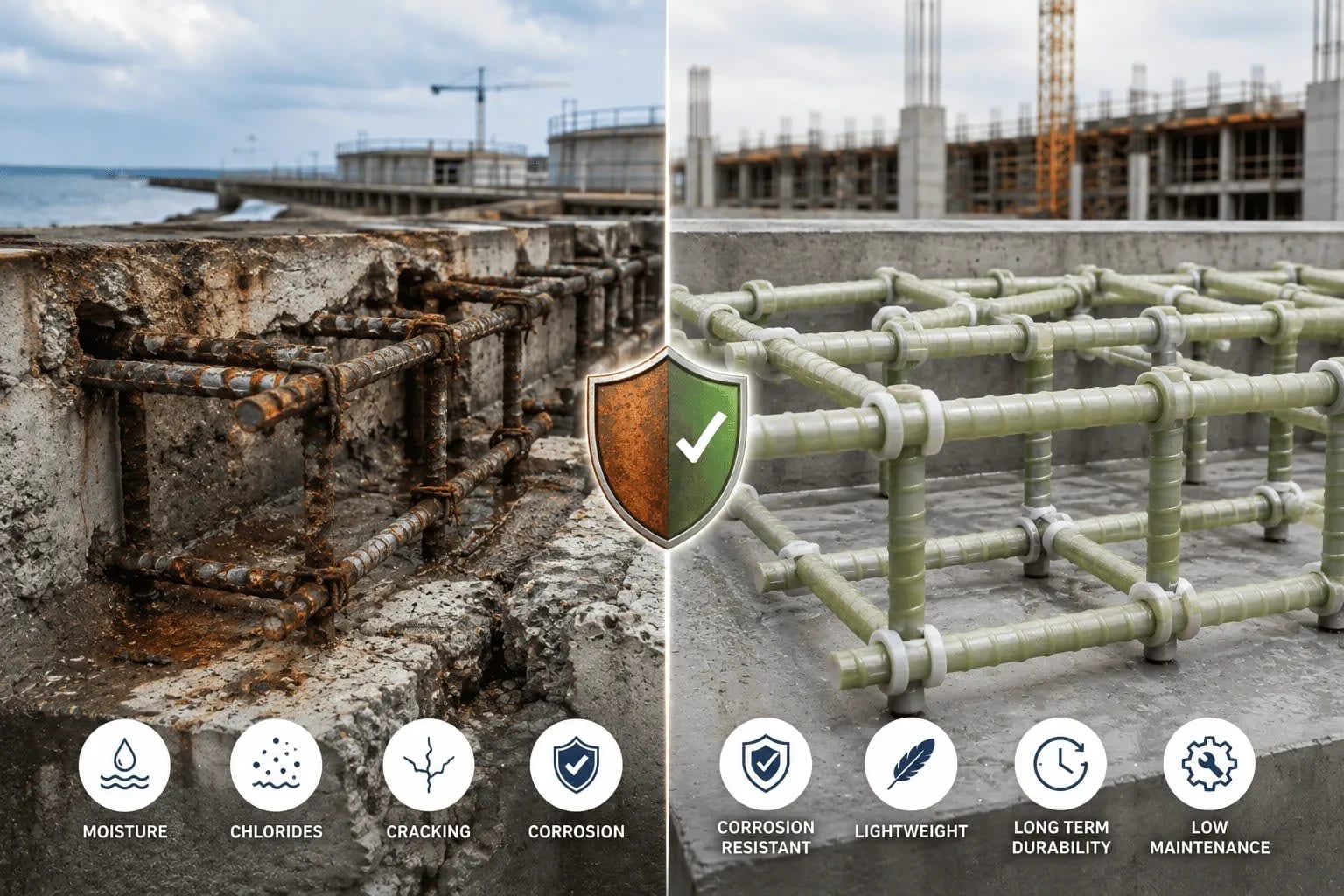
Continuous exposure to water and moisture can increase the risk of deterioration in conventional steel reinforcement, especially when combined with cracks or chloride exposure.
Projects such as bridges, water tanks, treatment plants, marine structures, drainage systems, and wet foundations can face these conditions.
For such applications, GFRP Rebar can be a better reinforcement option because it is corrosion-resistant and does not rust like steel. This makes it particularly suitable for projects where long-term moisture exposure is expected.
Are Chlorides Entering the Concrete?
Chlorides from seawater, saline soil, de-icing salts, and other sources can penetrate concrete and contribute to corrosion of conventional steel reinforcement.
This is a common concern for:
- Marine and coastal structures
- Roads and bridges
- Water and wastewater facilities
Glass fiber sariya offers a major advantage in these environments because it is resistant to chloride-related deterioration. For suitable applications, using GFRP during the design stage can help reduce long-term durability concerns.
Are There Cracks, Spalling, or Rust Stains in the Concrete?
Rust stains, cracks along reinforcement, spalling, delamination, and exposed steel can indicate that reinforcement deterioration is already affecting a structure.
Cracks can also allow moisture and aggressive substances to reach steel reinforcement more easily.
For new construction, choosing GFRP Sariya can help address durability concerns at the reinforcement level because it does not rust like steel. For existing structures showing deterioration, a qualified professional should assess the condition and recommend the appropriate repair strategy.
Is the Concrete Cover Over Rebar Adequate?
Adequate concrete cover helps protect conventional steel reinforcement from moisture, oxygen, and chlorides. Insufficient cover can increase the risk of premature steel deterioration.
This is especially important for:
- Bridge decks
- Foundations
- Coastal structures
- Parking structures
- Water and wastewater projects
While proper concrete cover remains essential, GFRP Rebar provides an additional advantage through its inherent resistance to deterioration. For projects exposed to aggressive environments, it can be a practical choice for improving long-term durability.
Is Fiberglass Rebar Stronger Than Steel Rebar?
Glass fiber reinforced polymer rebars can offer very high tensile strength along with excellent durability and lightweight handling. While steel has a higher elastic modulus and behaves differently under load, GFRP offers important advantages for projects where durability, resistance to aggressive environments, and ease of handling are priorities.
So, is fiberglass rebar stronger than steel rebar? The answer depends on the specific property and product being compared. Instead of looking at strength alone, engineers should consider the complete performance requirements of the project.
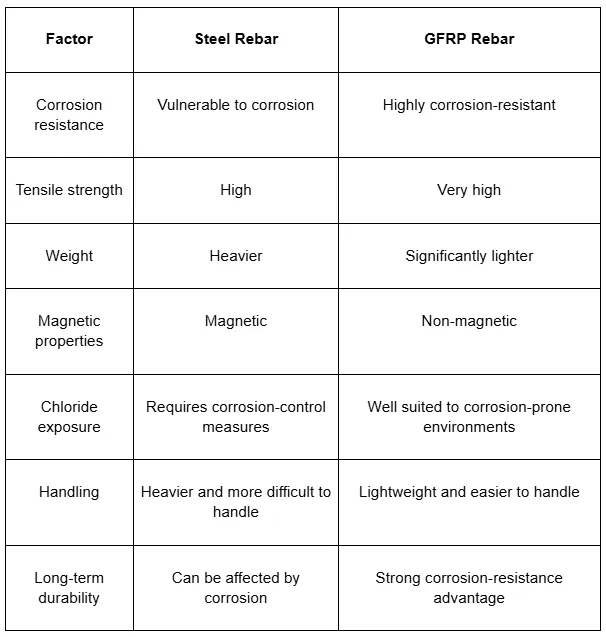
The biggest advantage of GFRP is that its value goes beyond tensile strength. Its durability, lightweight design, and resistance to aggressive environments make it a strong alternative to conventional steel reinforcement for suitable applications. For projects exposed to moisture, chlorides, or other demanding conditions, GFRP can provide a particularly compelling reinforcement solution.
Why Is Fiberglass Rebar Gaining Attention in India?
The use of fiberglass rebar in india is gaining attention as contractors, engineers, and infrastructure developers look for reinforcement solutions that can address long-term durability challenges.
India has a wide range of construction environments, from coastal areas with chloride exposure to infrastructure projects exposed to water, humidity, and demanding service conditions. In such applications, durable reinforcement can offer an important advantage over conventional steel.
For suitable projects, GFRP can also provide practical benefits such as easier handling because of its lightweight nature.
How Can You Reduce the Risk of Rebar Corrosion?
Corrosion prevention should begin during design and construction rather than after visible damage appears.
Consider the following steps:
- Assess the exposure environment before selecting reinforcement.
- Maintain the specified concrete cover during construction.
- Use quality concrete with appropriate durability characteristics.
- Control cracks through proper structural detailing and construction practices.
- Provide effective drainage to reduce unnecessary water exposure.
- Check reinforcement and concrete quality before and during installation.
- Consider corrosion-resistant reinforcement for aggressive environments.
- Inspect existing structures for early signs of deterioration.
For projects where corrosion is a major concern, GFRP reinforcement can be considered as part of a broader durability strategy rather than relying solely on conventional steel protection measures.
Conclusion
Rebar corrosion is not always visible at the beginning, but the conditions that cause it can often be identified during the planning stage. Water exposure, chloride-rich environments, cracking, and demanding service conditions should all be considered before finalizing the reinforcement system.
For projects where durability is a priority, glass fiber reinforced polymer rebars provide an alternative worth evaluating alongside conventional reinforcement. The right choice should be based on project requirements, design standards, exposure conditions, and long-term performance goals.
For reliable GFRP reinforcement, RebarX provides quality GFRP rebars designed for modern construction requirements, helping engineers and contractors make more informed reinforcement decisions.
FAQs
Q1. How to prevent rebar corrosion in concrete?
Using GFRP Rebar can help prevent corrosion-related problems because it does not rust like conventional steel reinforcement. It is especially suitable for concrete exposed to moisture, chlorides, and aggressive environments.
Q2. What are the main signs of rebar corrosion?
Rust stains, concrete cracks, spalling, exposed steel, and delamination are common warning signs of rebar corrosion.
Q3. Is GFRP Rebar better than steel rebar for corrosion-prone environments?
GFRP Rebar offers excellent corrosion resistance and does not rust, making it a strong option for demanding environments. It can be considered for bridges, marine structures, water facilities, and other moisture-exposed applications.
Q4. Can GFRP Rebar be used in water and chloride-exposed structures?
Yes, Glass fiber reinforced polymer Rebar is well suited for applications exposed to water, moisture, and chlorides because it is corrosion-resistant. It can support long-term durability in suitable marine, wastewater, and infrastructure projects.