
Introduction: The Hidden Cost of Corrosion in Concrete Structures
Steel reinforcement has been the backbone of concrete structures for decades. However, its susceptibility to corrosion—especially in marine environments, water treatment plants, and coastal infrastructure—has led to significant structural failures worldwide. These failures often result in expensive repairs, downtime, and safety hazards.
Enter Glass Fiber Reinforced Polymer (GFRP) rebars. Unlike steel, GFRP rebars are corrosion-resistant, lightweight, and durable, making them an ideal choice for modern infrastructure projects.
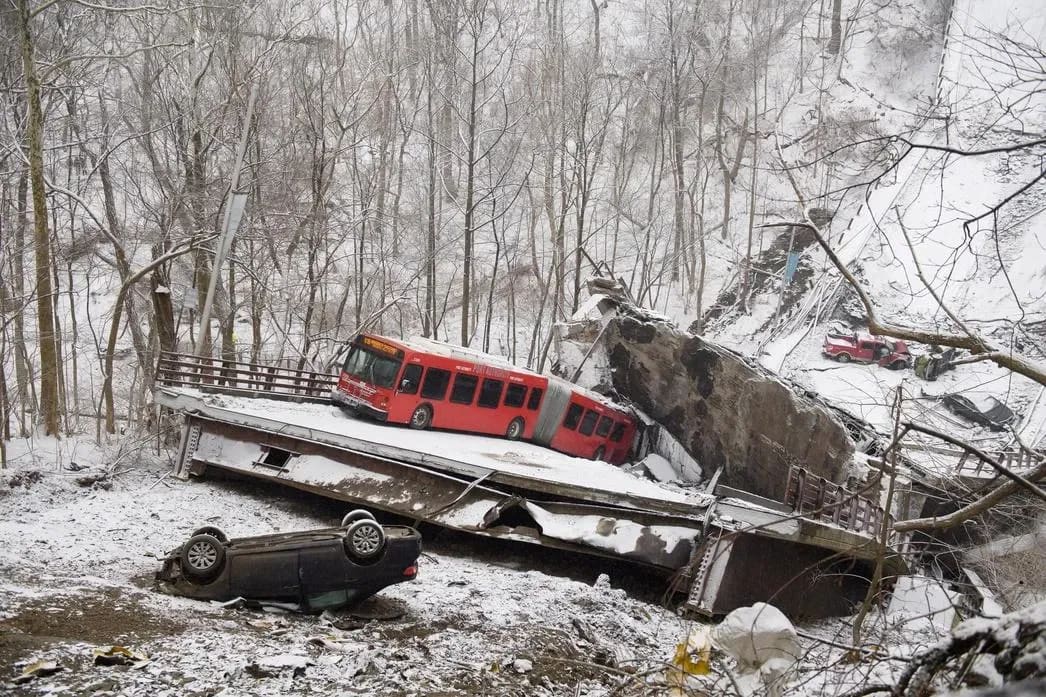
1. Pittsburgh's Forbes Avenue Bridge Collapse (2022)
In January 2022, Pittsburgh's Forbes Avenue Bridge collapsed due to extensive corrosion of the steel reinforcement. Investigators found that poor maintenance and inadequate inspections over 15 years led to the bridge's failure, injuring four people.
How GFRP Could Have Helped:GFRP rebars would have resisted corrosion, potentially preventing the structural degradation and subsequent collapse.
2. Texas Parking Garage Collapse (2022)
A five-story parking garage in Houston, Texas, partially collapsed just two years after construction. The failure was attributed to punching shear issues, exacerbated by the use of GFRP rebars.
How GFRP Could Have Helped:While GFRP rebars are corrosion-resistant, their brittle nature can lead to sudden failures under certain conditions. Proper design and hybrid reinforcement strategies could mitigate such risks.
3. Corrosion in Coastal Bridges
Bridges in coastal areas are particularly vulnerable to chloride-induced corrosion. For instance, a study on I-girder bridges revealed significant deterioration due to chloride exposure, compromising structural integrity.
How GFRP Could Have Helped:GFRP rebars' resistance to chlorides would have preserved the bridge's structural capacity, extending its lifespan.
4. Water Treatment Plant Infrastructure Failures
Steel-reinforced structures in water treatment plants often suffer from accelerated corrosion due to constant exposure to moisture and chemicals. This leads to cracking, spalling, and structural weakening.
How GFRP Could Have Helped:GFRP rebars would have prevented corrosion-related damages, ensuring the longevity and reliability of the infrastructure.
5. Marine Structure Deterioration
Marine structures, such as piers and docks, face constant exposure to saltwater, leading to steel rebar corrosion and structural degradation.
How GFRP Could Have Helped:GFRP rebars' resistance to saltwater corrosion would have maintained the structural integrity of these marine infrastructures.
6. Highway Overpasses in Urban Areas
Urban highway overpasses are subjected to deicing salts, moisture, and traffic-induced vibrations, accelerating steel rebar corrosion and leading to cracking and spalling.
How GFRP Could Have Helped:Using GFRP rebars would have mitigated corrosion, reducing maintenance costs and enhancing safety.
7. Industrial Flooring Systems
Industrial flooring systems often experience chemical spills, moisture infiltration, and heavy loads, leading to steel rebar corrosion and structural failures.
How GFRP Could Have Helped:GFRP rebars' chemical resistance would have preserved the flooring's integrity, reducing the need for repairs.
Conclusion: Embracing GFRP for Future-Ready Infrastructure
The aforementioned case studies highlight the critical role of corrosion-resistant materials in ensuring the longevity and safety of infrastructure. GFRP rebars offer a viable solution to combat the challenges posed by steel rebar corrosion.
At RebarX, we specialize in providing high-quality GFRP rebars tailored to meet the specific needs of your projects. Contact us today to learn more about how our products can enhance the durability and safety of your infrastructure.
Suggested SEO Keywords:
GFRP rebars in infrastructure
Corrosion-resistant reinforcement
Benefits of GFRP over steel
GFRP in water treatment plants
Marine structure reinforcement
Urban highway overpass materials
Industrial flooring reinforcement