
Unlocking a New Era in Construction: Why GFRP Rebar is the Smart Choice for Your Next Project with RebarX
In the world of construction, innovation is key to building structures that are stronger, last longer, and are more cost-effective in the long run. While steel has been the traditional backbone of reinforced concrete, a superior alternative is rapidly gaining ground: Glass Fiber Reinforced Polymer (GFRP) rebar.
At RebarX, we're passionate about bringing this revolutionary material to the forefront of Indian construction. We understand you might have questions, even doubts, about moving away from tried-and-tested steel. That's precisely what this blog post aims to address.
Why GFRP Rebar from RebarX is a Game-Changer: Clearing Your Doubts
Let's dive into the core advantages of GFRP rebar and tackle the common questions we hear from potential customers like you:
1. "Is GFRP Rebar as Strong as Steel?"
This is often the first question, and the answer might surprise you: Yes, and in many ways, it's even stronger! GFRP rebar boasts a significantly higher tensile strength than traditional steel – often twice as strong. While steel relies on ductility (its ability to stretch and bend before breaking), GFRP offers exceptional strength-to-weight ratio. This means you can achieve superior structural integrity with less material, leading to lighter structures and reduced loads. RebarX GFRP rebar is engineered for maximum performance, ensuring your structures are built to last.
2. "But Steel Doesn't Corrode, Right?"
Here's the critical difference. Steel, while strong, is highly susceptible to corrosion, especially in environments exposed to moisture, chlorides (like in coastal areas or where de-icing salts are used), or aggressive chemicals. This corrosion leads to rust, expansion, cracking of concrete, and ultimately, structural degradation and costly repairs.
RebarX GFRP rebar is 100% corrosion-resistant. It is immune to rust, chlorides, and most chemical attacks. This is its biggest superpower. Imagine bridges, marine structures, water treatment plants, or even foundations in aggressive soil – structures built with RebarX GFRP rebar will stand the test of time, reducing maintenance needs and extending their lifespan by decades, often over 100 years!
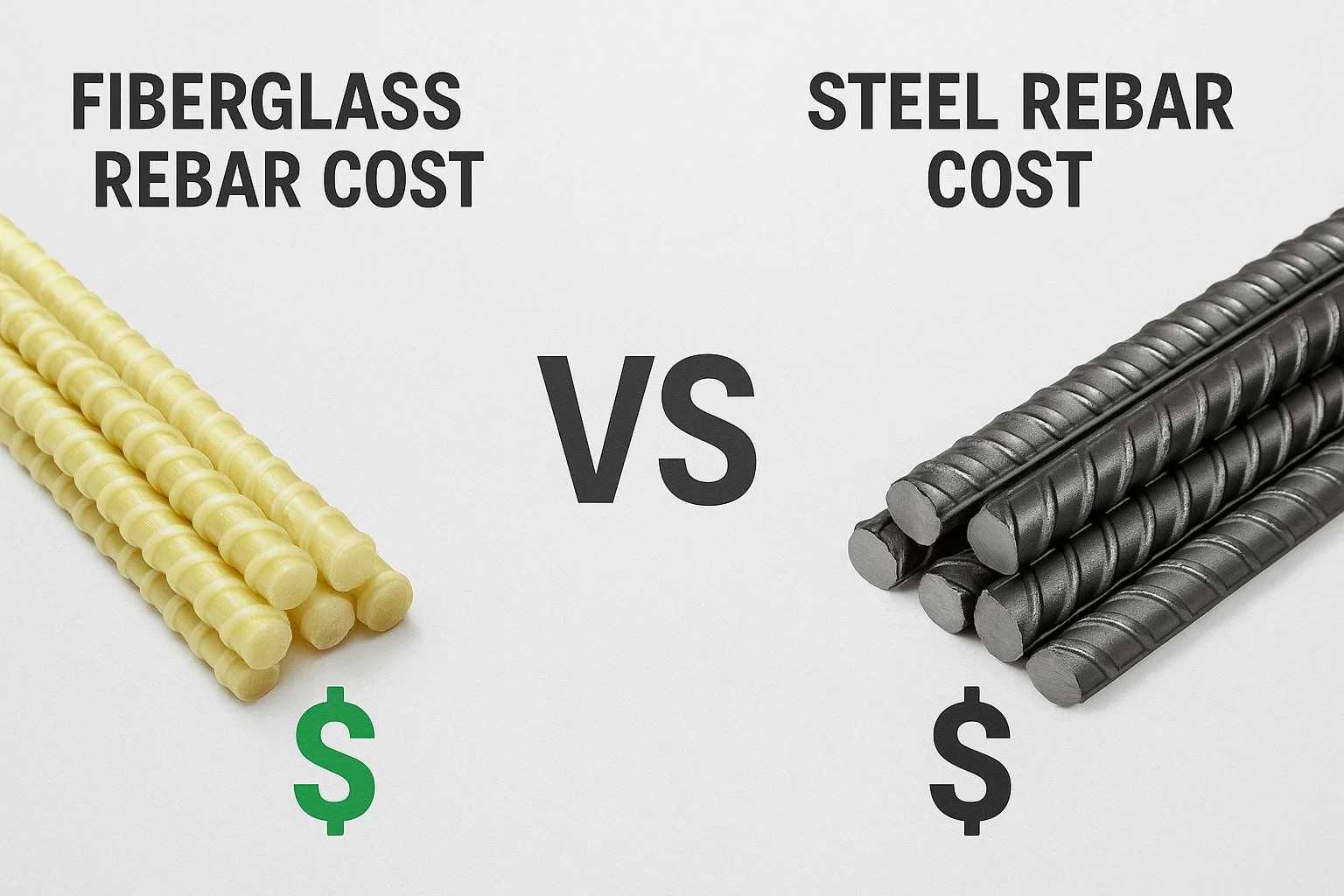
3. "Won't it be much more expensive?"
While the initial material cost of GFRP rebar might be slightly higher per meter than conventional steel, this is where a lifecycle cost analysis becomes crucial. Consider these factors with RebarX:
• Reduced Transportation Costs: GFRP rebar is approximately 75% lighter than steel. This translates to significantly lower freight costs and allows for more material to be transported per trip.
• Faster, Easier Installation: Its lightweight nature makes handling and placement on-site much easier and quicker, reducing labor costs and accelerating project timelines. No heavy lifting equipment is always needed.
• Zero Maintenance & Repairs: Because it won't corrode, RebarX GFRP eliminates the need for expensive repairs, rehabilitation, and cathodic protection that steel-reinforced structures often require over their lifespan. This leads to massive long-term savings.
• Extended Service Life: A structure reinforced with RebarX GFRP can last two to three times longer than a steel-reinforced one. This means fewer replacements and a better return on your investment over the entire life of the project.
When you factor in these long-term benefits, RebarX GFRP rebar often proves to be the more cost-effective and economical solution.
4. "Can it be used in all types of construction?"
Absolutely! RebarX GFRP rebar is incredibly versatile and is being increasingly adopted across a wide range of applications:
• Bridges and Highways: Especially bridge decks exposed to de-icing salts and harsh weather.
• Marine Structures: Piers, seawalls, docks – where corrosion is a constant threat.
• Water Treatment Plants & Sewage Facilities: Immune to chemical attacks.
• Parking Structures: Battling the effects of water and de-icing agents.
• Foundations: Particularly in corrosive soil environments.
• Tunnels and Underground Structures.
• MRI Rooms and Sensitive Electrical Areas: GFRP is non-magnetic and electrically non-conductive, preventing interference.
• Industrial Floors: Where chemical exposure is a concern.
5. "Are there any special considerations for working with GFRP?"
Yes, there are a few differences from steel, but with RebarX's support, they are easily managed:
• No On-Site Bending: GFRP rebar cannot be bent on-site like steel. Any bends or specific shapes need to be pre-manufactured at the factory. RebarX offers custom lengths and bends to meet your project's precise requirements.
• Cutting Tools: It requires specific cutting tools, like diamond-coated blades, for clean cuts.
• Fasteners: Plastic clips or specialized fasteners are typically used for tying GFRP rebar, ensuring its non-corrosive properties are maintained.
We at RebarX provide comprehensive technical support and guidance to ensure a smooth transition and efficient installation process for your team.
Partnering for a Sustainable Future with RebarX
Beyond its technical and economic advantages, RebarX GFRP rebar also offers significant environmental benefits. Its production consumes less energy than steel, and its lightweight nature reduces transportation emissions. Moreover, its extended lifespan means less demolition, less waste, and a lower carbon footprint for your construction projects.
At RebarX, we are committed to providing high-quality GFRP rebars that meet international standards. We believe in building not just structures, but a more sustainable and durable future for India's infrastructure.
Ready to explore how RebarX GFRP rebar can elevate your next project? Contact us today for a detailed consultation, project-specific pricing, and to see how our GFRP solutions can deliver superior performance and long-term value. Let's build something extraordinary, together.