
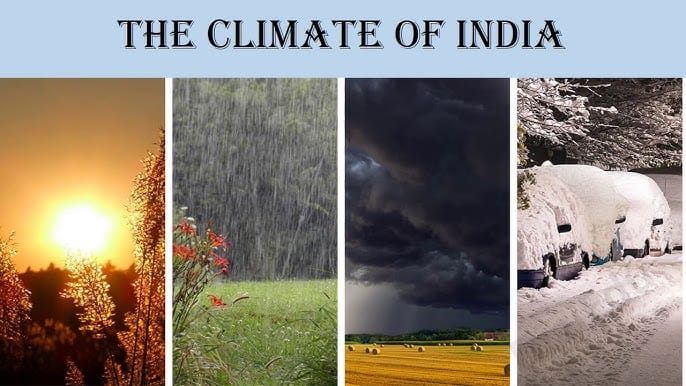
If you live in India, you already know how unpredictable our weather can be.From the salty sea breeze in Mumbai to the scorching summers of Rajasthan, the heavy monsoons in Kerala, and the chilly winters of the north — our country experiences every kind of climate imaginable.
For our buildings, bridges, and roads, that means one thing: constant stress on concrete and steel.And the hidden victim inside that concrete? The steel rebar.
🌉 The Problem: When Weather Becomes the Enemy
In a coastal project a few years ago, engineers discovered how quickly steel rebars start rusting under the attack of salty, humid air. Within just a few years, corrosion crept in — cracks appeared, rust stains spread, and repair work became routine.
The team replaced steel with GFRP rebars (Glass Fiber Reinforced Polymer rebars) — and what happened next completely changed how they looked at durability.
The structure stayed rust-free, crack-free, and maintenance-free — even under constant exposure to sea air.
This success story didn’t just help coastal builders — it opened up new thinking for the entire country.
🧩 The Solution: GFRP Rebars — Built for Every Climate in India
What makes GFRP rebars so special is that they are made from glass fibers and resin, not metal.That means — no rust, no corrosion, no weakening over time.
Here’s how GFRP performs in different parts of India:
🌴 Coastal Regions (Mumbai, Chennai, Vizag, Goa)
High humidity and salty air eat away at steel.👉 GFRP rebars stay completely unaffected by chloride and moisture — no corrosion, no rust marks, no cracks.
☀️ Hot and Dry Regions (Rajasthan, Gujarat)
Extreme heat causes expansion and contraction in concrete, leading to cracks.👉 GFRP rebars have low thermal expansion, so they handle temperature changes smoothly without stressing the concrete.
🌧️ Heavy Rainfall & Humid Zones (Kerala, Assam, Odisha)
Excess moisture seeps into structures and starts rusting steel from the inside.👉 GFRP rebars are non-metallic, meaning no reaction with water, ensuring long-term strength and zero maintenance.
❄️ Cold and Hilly Regions (Himachal, Uttarakhand, North-East)
Repeated freeze–thaw cycles create microcracks that speed up steel corrosion.👉 GFRP rebars resist cracking and don’t corrode, even when concrete expands or contracts due to freezing conditions.
🏗️ Central India (Madhya Pradesh, Chhattisgarh)
Hot summers, wet monsoons, and mild winters — all in one region.👉 GFRP rebars handle temperature swings, moisture, and chemical exposure effortlessly, making them ideal for bridges, foundations, and water-retaining structures.
💡 The Result: One Material, One Solution for India
Across all these climates, one thing remains consistent: steel corrodes, GFRP doesn’t.That simple difference means:
Longer service life for structures.
Less maintenance and repair costs.
Stronger, safer, and more sustainable infrastructure.
Whether it’s a bridge in Gujarat, a metro in Delhi, a port in Chennai, or a flyover in Indore, GFRP rebars deliver the same performance — year after year, rain or shine.
🇮🇳 The Future of Indian Construction
India’s weather challenges are not going away — in fact, they’re only getting harsher. But our materials can get smarter.
At RebarX, we believe GFRP rebars are the next step toward stronger, corrosion-free, and climate-resilient construction across India.They don’t just replace steel — they redefine what long-lasting infrastructure means.
No rust. No corrosion. No compromise.Just strength that stands tall in every season, across every corner of India. 🌦️