
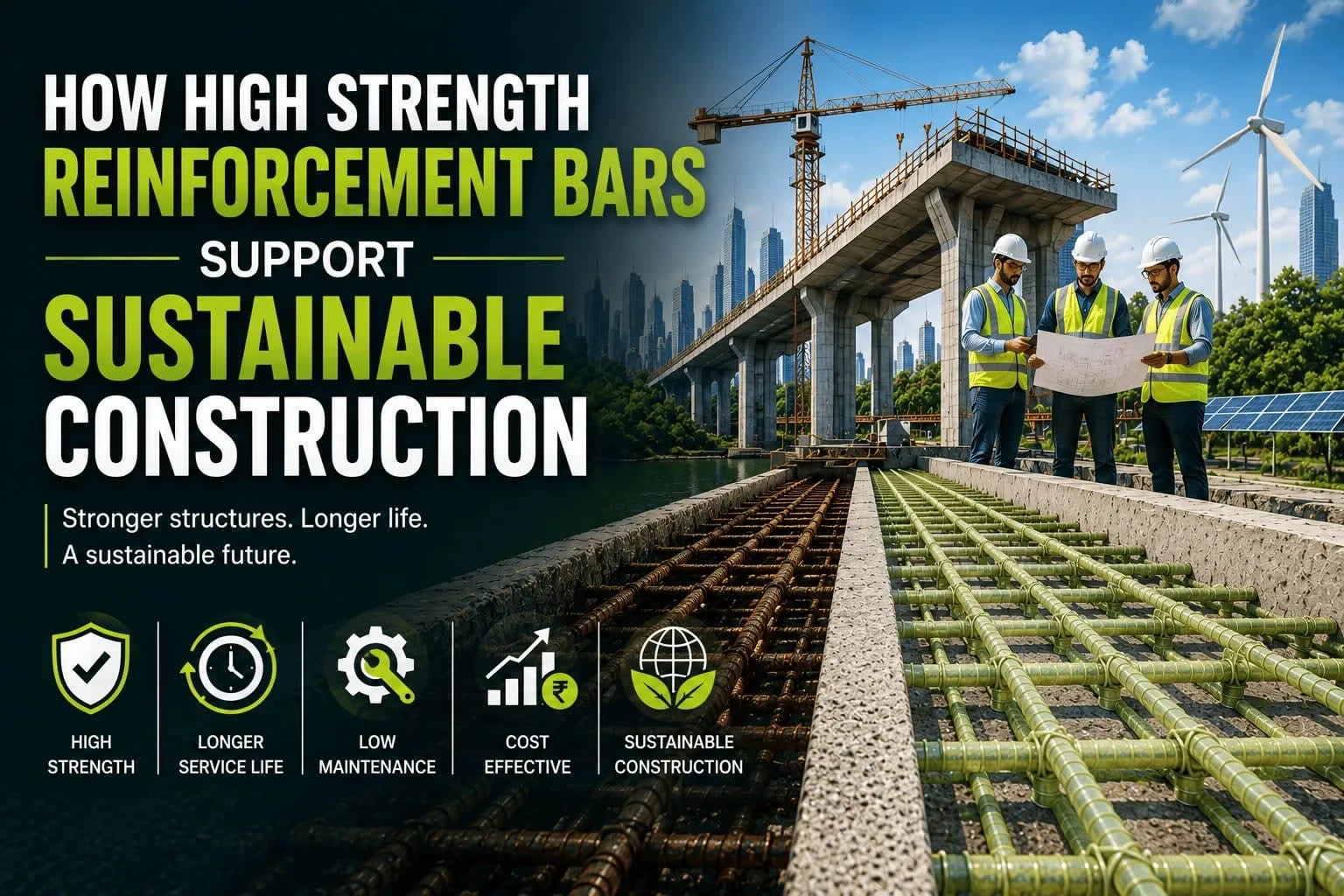
The construction industry is entering a new era where strength alone is not enough. Engineers, contractors, and infrastructure developers are now focusing on materials that can provide durability, lower maintenance requirements, and better long-term value. This raises an important question: How do high strength reinforcement bars support sustainable construction and help build structures that last longer?
The answer is that advanced reinforcement solutions, such as GFRP rebars, improve structural performance, reduce repair requirements, and provide better long-term cost efficiency compared to traditional steel rebar. With excellent durability, corrosion resistance, and lower maintenance needs, GFRP rebar helps conserve resources throughout the lifecycle of a project while supporting stronger and more sustainable construction practices.
Why Is Durable Reinforcement Important for Sustainable Construction?
Sustainable construction is not only about reducing environmental impact during the building process. It also focuses on creating structures that remain functional, safe, and efficient for decades.
Concrete structures often face challenges such as moisture exposure, chemical environments, temperature changes, and heavy loading. Over time, these factors can affect reinforcement performance and increase the need for repairs.
Choosing the right reinforcement material plays a major role in improving the overall lifecycle of a structure. High-quality reinforcement solutions help reduce:
- Frequent repair requirements.
- Material replacement costs.
- Construction waste.
- Downtime caused by maintenance work.
- Long-term operational expenses.
Today, engineers are moving beyond short-term construction decisions and considering how materials perform throughout the complete lifespan of a project.
This is why GFRP Rebars are becoming an important choice for projects where durability, reliability, and sustainability are key priorities.
How Do High Strength Reinforcement Bars Improve Structural Performance?
Reinforcement is one of the most important components of concrete construction. While concrete provides compressive strength, reinforcement helps structures handle tension, movement, and external loads.
Modern reinforcement materials are designed to deliver better performance in challenging environments while maintaining structural reliability.
Key advantages include:
- High load-bearing capability.
- Better durability in demanding conditions.
- Reduced deterioration over time.
- Improved structural stability
- Longer service life
For infrastructure projects such as bridges, industrial facilities, and transportation systems, selecting durable reinforcement helps maintain safety standards while reducing future maintenance requirements.
Advanced solutions like Glass Fiber Reinforced Polymer Bars are gaining popularity because they provide excellent strength while offering resistance against common durability challenges faced by traditional materials.
Are GFRP Rebars a Sustainable Choice for Modern Construction?
The construction industry is increasingly choosing GFRP Rebars as a durable and cost-effective alternative to traditional steel rebars. With excellent corrosion resistance, lightweight properties, and long service life, GFRP Rebars help reduce maintenance and replacement costs, making them a more economical solution for long-term construction projects.
Compared to steel rebars, GFRP Rebars offer better lifecycle cost benefits as they minimize corrosion-related repairs and provide consistent performance in challenging environments. Their ability to withstand moisture, chemicals, and harsh weather conditions makes them a sustainable choice for bridges, marine structures, industrial facilities, and other infrastructure projects.
The sustainability advantages of GFRP-based reinforcement include:

The increasing adoption of gfrp reinforcement shows how the construction industry is shifting toward smarter materials that focus on lifecycle efficiency.
How Do Reinforcement Materials Help Reduce Lifecycle Costs?
Engineers and contractors today are not only looking at the initial investment but also considering long-term savings, durability, and maintenance requirements. This is why many professionals are choosing glass fiber reinforced polymer rebar as a cost-effective reinforcement solution that offers multiple benefits throughout the project lifecycle.
Compared to traditional steel reinforcement, GFRP Rebar provides advantages such as lightweight handling, corrosion resistance, reduced maintenance needs, and longer service life. Its lower weight helps reduce transportation and installation efforts, while its durability minimizes future repair expenses. These benefits allow project owners to save costs while achieving reliable structural performance for many years.
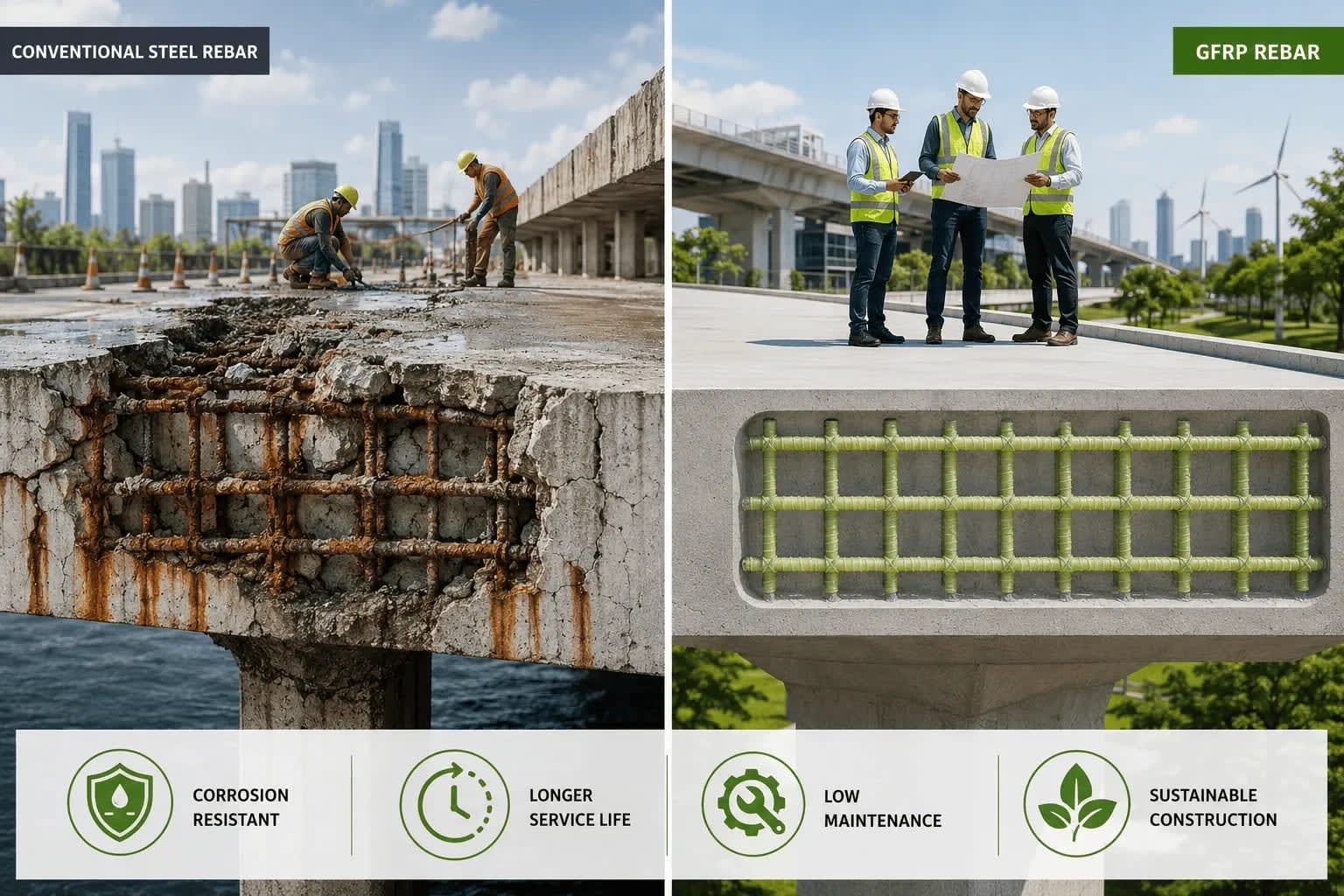
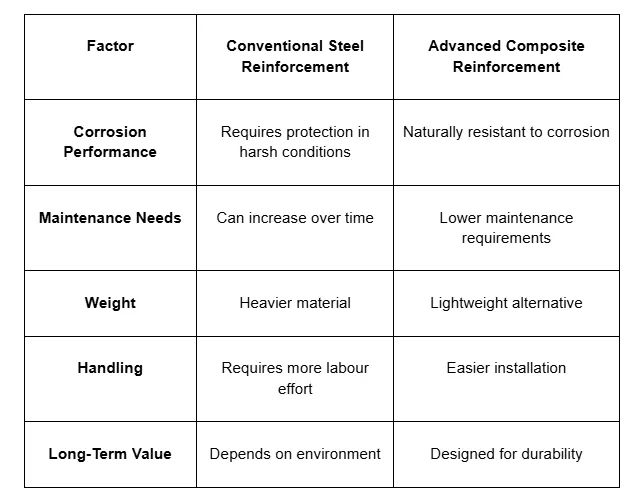
By focusing on lifecycle performance, project owners can achieve better financial efficiency while also supporting sustainable construction practices.
How Are Modern Reinforcement Technologies Shaping Future Infrastructure?
The future of construction depends on materials that can support growing infrastructure demands while reducing long-term environmental impact. As cities expand and infrastructure projects become more demanding, durability has become a key factor in material selection. GFRP Rebars are increasingly being used in critical infrastructure projects where corrosion resistance, long service life, and reduced maintenance are important design priorities.
Why Is Long-Term Performance Becoming More Important?
Infrastructure projects are designed to serve communities for several decades, making long-term durability a critical factor in reinforcement selection. Frequent repairs and maintenance activities not only increase project costs but also consume additional materials, energy, and resources.
This is why engineers are increasingly focusing on reinforcement solutions like GFRP Rebars, which are designed to provide reliable performance in challenging environments while reducing long-term maintenance requirements. When selecting reinforcement materials, key factors include:
- Expected service life.
- Environmental exposure.
- Maintenance requirements.
- Structural reliability.
- Overall project sustainability.
By offering excellent corrosion resistance, high durability, and consistent performance over time, Glass Fiber Reinforced Polymer (GFRP) Bars help extend the service life of concrete structures and support more sustainable infrastructure development. Their ability to reduce corrosion-related repairs and lifecycle costs makes them a preferred choice for projects where long-term performance is a priority.
How Do GFRP-Based Materials Support Sustainable Building Goals?
Sustainable construction requires materials that can perform efficiently while reducing future resource consumption.
Modern composite reinforcement solutions contribute to sustainability by:
- Extending structural lifespan.
- Reducing maintenance frequency.
- Minimizing replacement requirements.
- Supporting efficient construction practices.
- Improving performance in challenging environments.
Glass Fiber Reinforced Polymer Bars offer an alternative approach for engineers who are looking beyond conventional reinforcement methods.
With increasing demand for durable infrastructure, these materials are helping transform how reinforcement systems are selected for future projects.
Conclusion
The construction industry is moving toward solutions that provide strength, durability, and sustainability together. High strength reinforcement bars play an important role in this transition by helping structures achieve better performance, reduced maintenance requirements, and longer service life.
As infrastructure needs continue to grow, materials based on glass fiber reinforced polymer technology are becoming an important part of modern construction strategies. Their durability, lightweight characteristics, and resistance to challenging environments make them suitable for projects where long-term performance matters.
RebarX is committed to delivering advanced reinforcement solutions that help engineers, contractors, and infrastructure developers build stronger, more sustainable, and future-ready structures across India and international markets.
FAQs
1. Are GFRP Rebars more cost-effective than steel rebars?
Yes, GFRP Rebars are a cost-effective alternative to steel rebars as they offer a lower initial cost along with long-term savings. Their lightweight properties help reduce transportation and installation expenses, while their corrosion resistance minimizes future maintenance and repair costs, making them an economical choice for durable construction projects.
2. How do GFRP Rebars support sustainable construction?
GFRP Rebars support sustainable construction by offering corrosion resistance, longer service life, and lower maintenance requirements compared to traditional steel reinforcement. By reducing repair needs and material replacement, they help conserve resources and improve the long-term sustainability of structures.
3. Why are engineers choosing GFRP Rebars instead of traditional steel reinforcement?Engineers are choosing GFRP Rebars because they offer excellent durability, lightweight handling, resistance to corrosion, and longer service life. These benefits help improve structural performance while reducing maintenance challenges over the lifecycle of a project.