
Introduction
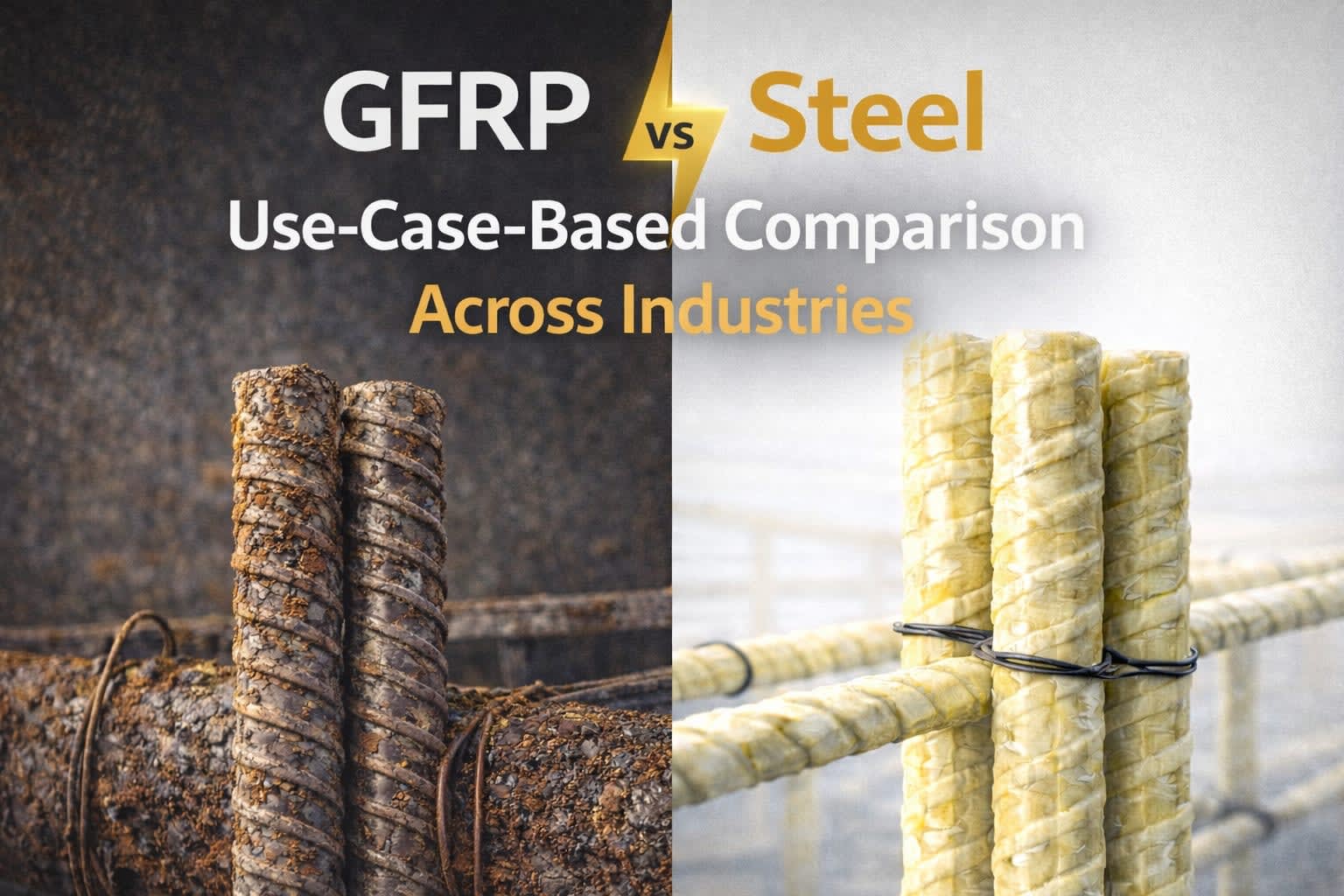
The debate around GFRP rebar vs steel rebar is no longer theoretical — it is practical, project-driven, and performance-focused. Engineers and infrastructure planners are increasingly evaluating reinforcement materials based on specific use cases rather than tradition.
Steel has dominated construction for decades. However, as durability challenges and lifecycle costs rise, Glass Fiber Reinforced Polymer (GFRP) is rapidly emerging as a superior alternative in many applications.
Leading rebar manufacturers in India are now expanding their product portfolios to include GFRP reinforcement solutions, reflecting a clear shift in industry demand.
This article provides a structured, use-case-based comparison of GFRP and steel across key industries.
Material Fundamentals: Understanding the Core Difference
Before analyzing use cases, it is important to understand the core material distinction.
Steel Rebar
- Metallic
- High compressive and tensile strength
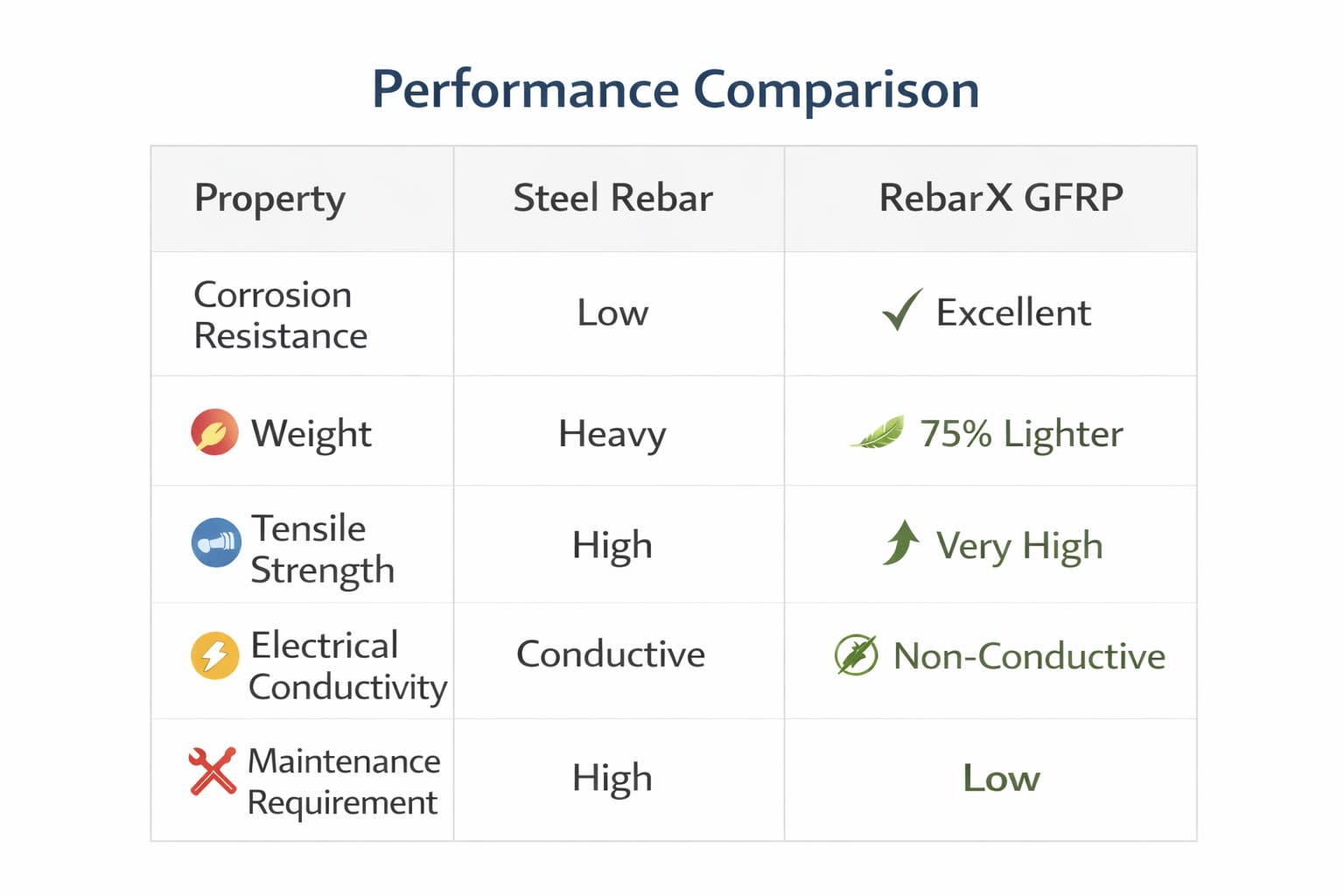
- Prone to corrosion
- Conductive and magnetic
- Heavy
GFRP Rebar
- Non-metallic composite
- High tensile strength
- 100% corrosion resistant
- Non-conductive and non-magnetic
- Up to 75% lighter than steel
The choice between GFRP and steel depends heavily on environmental exposure, structural requirements, and lifecycle expectations.
Industry-Wise Comparison
1. Bridges and Highways
Steel Rebar Performance
Steel has traditionally been used in bridges and highway decks. However, exposure to:
- De-icing salts
- Rainwater
- Humidity
- Traffic vibration
leads to corrosion over time.
Corrosion causes expansion, cracking, and expensive repairs.
GFRP Advantage
In bridge decks and highway slabs, GFRP offers:
- Complete resistance to chloride attack
- Extended service life
- Reduced maintenance cycles
- Lower lifecycle costs
For long-span infrastructure exposed to moisture, the GFRP rebar vs steel rebar comparison clearly favors GFRP.
2. Coastal and Marine Structures
Steel in Marine Environments
Saltwater is one of steel’s biggest weaknesses. Marine structures reinforced with steel often require:
- Protective coatings
- Cathodic protection systems
- Frequent structural repair
Despite these measures, corrosion remains a persistent issue.
GFRP in Marine Applications
GFRP does not rust in saltwater. It is ideal for:
- Sea walls
- Jetties
- Piers
- Coastal bridges
In aggressive marine environments, GFRP provides unmatched durability.
For coastal infrastructure projects, many rebar manufacturers in India now recommend GFRP as the preferred solution.
3. Industrial and Chemical Plants
Steel Limitations
Chemical exposure accelerates corrosion in steel reinforcement. Acidic and alkaline environments reduce structural lifespan significantly.
GFRP Performance
GFRP offers:
- High chemical resistance
- No corrosion expansion
- Long-term structural stability
In wastewater treatment plants and chemical processing facilities, the GFRP rebar vs steel rebar comparison strongly supports GFRP.
4. Residential and Commercial Buildings
Steel in Standard Construction
In typical dry indoor environments, steel performs adequately and remains cost-effective.
Where GFRP Adds Value
GFRP becomes advantageous in:
- Basement foundations exposed to groundwater
- Parking structures exposed to de-icing salts
- Rooftop slabs with moisture exposure
For standard low-risk buildings, steel may remain practical. However, for durability-focused commercial projects, GFRP offers long-term advantages.
5. Power Plants and Electrical Infrastructure
Steel Challenges
Steel is conductive and magnetic. In sensitive electrical installations, this can cause interference.
GFRP Benefits
GFRP is:
- Electrically non-conductive
- Non-magnetic
- Transparent to electromagnetic waves
For substations, rail systems, and power plants, GFRP provides operational advantages beyond corrosion resistance.
6. Sustainable and Green Projects
Sustainability is increasingly influencing material selection.
Steel Considerations
Steel production is energy-intensive, and corrosion-related repairs increase lifecycle emissions.
GFRP Contribution
GFRP supports sustainable construction through:
- Extended lifespan
- Reduced repair cycles
- Lower lifecycle carbon footprint
- Reduced material replacement
In green infrastructure, the GFRP rebar vs steel rebar debate often leans toward GFRP due to durability-driven sustainability.
Cost Perspective: Initial vs Lifecycle Investment
One of the most common misconceptions is that steel is always more economical.
While steel may have a lower initial cost, corrosion-related repairs significantly increase lifecycle expenses.
GFRP may involve a higher upfront investment in some cases, but it:
- Reduces long-term maintenance
- Prevents structural rehabilitation costs
- Minimizes downtime disruptions
- Improves total return on investment
Infrastructure planners now evaluate reinforcement choices through a lifecycle cost lens rather than material cost alone.
When Should You Choose Steel?
Steel remains suitable for:
- Low-risk, dry environments
- Short-term structures
- Budget-constrained projects without aggressive exposure
It is still widely available and well-understood across the industry.
When Is GFRP the Smarter Choice?
GFRP becomes the superior option when projects involve:
- High moisture exposure
- Chloride environments
- Chemical exposure
- Marine conditions
- Long service-life requirements
- Reduced maintenance expectations
In such cases, performance clearly outweighs tradition.
The Evolving Role of Rebar Manufacturers in India
The reinforcement market in India is evolving rapidly. Infrastructure modernization, coastal expansion, and sustainability targets are driving demand for advanced materials.
Leading rebar manufacturers in India are now investing in composite reinforcement technology to meet this growing demand.
As infrastructure standards rise, GFRP is becoming an essential part of the reinforcement landscape.
Conclusion
The choice between GFRP and steel is no longer about replacing tradition — it is about selecting the right material for the right environment.
In low-risk, dry applications, steel remains practical. However, in corrosion-prone, marine, chemical, or durability-critical projects, GFRP offers a clear performance advantage.
The GFRP rebar vs steel rebar comparison across industries demonstrates that material selection must align with environmental exposure, lifecycle expectations, and long-term cost efficiency.
As infrastructure demands grow more complex, forward-thinking developers and engineers are making data-driven decisions — and increasingly, those decisions favor GFRP.
Frequently Asked Questions (FAQs)
1. Is GFRP stronger than steel?
GFRP offers higher tensile strength but different elastic properties. It is ideal for tensile-dominated applications.
2. Why are rebar manufacturers in India producing GFRP?
Rising demand for corrosion-resistant infrastructure is driving manufacturers to expand into composite reinforcement solutions.
3. Is GFRP more expensive than steel?
Initial costs may vary, but GFRP reduces lifecycle maintenance expenses significantly.
4. Can GFRP replace steel completely?
Not in every case. Material selection depends on environmental exposure and structural design requirements.
5. Where is GFRP most beneficial?
Marine structures, bridges, chemical plants, and long-life infrastructure projects benefit the most.