
1. Introduction: The Future of Reinforcement Is Here
In modern construction, strength alone isn’t enough — durability, flexibility, and sustainability now define success. As a result, builders and engineers are increasingly turning to Fiberglass Reinforced Polymer (FRP) — a game-changing innovation that offers superior performance compared to traditional steel rebars.
Across India, glass fiber-reinforced polymer rebar has become a preferred choice for infrastructure, coastal structures, bridges, and industrial projects. With the nation’s construction industry evolving rapidly, understanding the uses and key benefits of fiberglass rebar can help you stay ahead of the curve.
2. What Is Fiberglass Rebar (GFRP)?
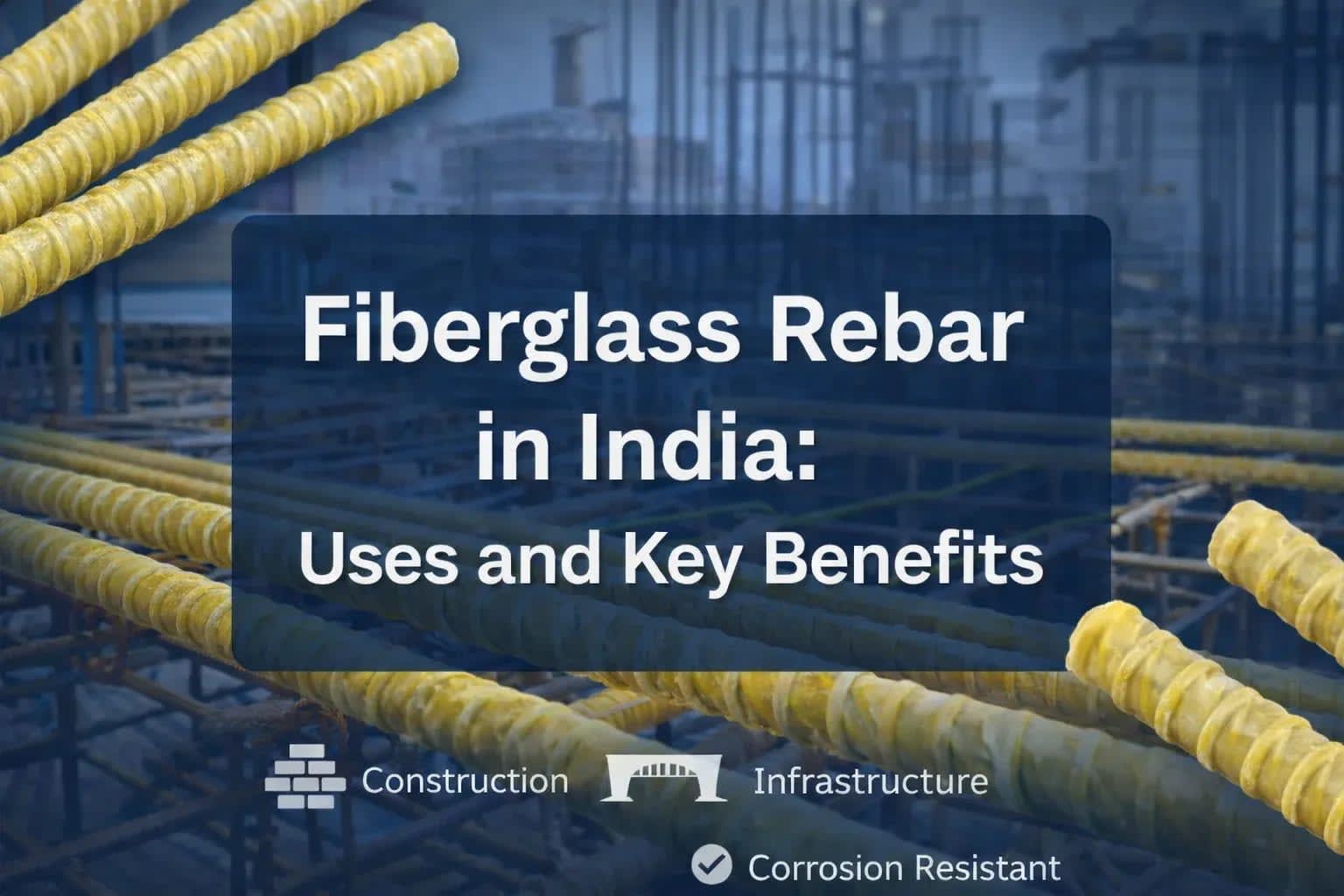
Fiberglass Rebar, also known as Glass Fiber Reinforced Polymer Rebar (GFRP), is a composite material made from glass fibers and a polymer resin (usually vinyl ester or epoxy).
Unlike steel, which can corrode over time, fiberglass rebar is:
- Non-corrosive
- Non-conductive
- Lightweight
- High in tensile strength
These properties make it ideal for environments where moisture, chemicals, or saltwater exposure would normally damage traditional steel reinforcements.
3. Why India Is Embracing Fiberglass Rebar
With rapid urbanization and increased focus on infrastructure quality, fiberglass rebar in India is witnessing high demand across multiple sectors.
The Indian construction market faces common challenges like:
- Corrosion of steel in humid or coastal areas
- Rising material and maintenance costs
- Need for longer-lasting, low-maintenance structures
Fiberglass rebar provides solutions to all these challenges, making it a smart investment for modern projects.
4. Composition and Manufacturing of GFRP Rebar
A typical glass fiber reinforced polymer rebar consists of:
- Continuous glass fibers (for tensile strength)
- Polymer resin matrix (for binding and corrosion resistance)
- Surface coatings or sand layers (for improved bonding with concrete)
Manufacturing involves a pultrusion process, where continuous glass fibers are drawn through resin and heated to form rods of consistent diameter. The result? Precision-engineered reinforcement that’s stronger and more durable than steel under specific conditions.
5. Key Benefits of Using Fiberglass Rebar in India
a. Lightweight & Easy to Handle
Fiberglass rebar is up to 75% lighter than steel, reducing transportation costs and easing installation — especially in high-rise or remote projects.
b. High Tensile Strength
Despite being lightweight, GFRP rebars provide superior tensile strength (up to twice that of steel) — ensuring long-term performance and stability.
c. Non-Conductive & Non-Magnetic
Ideal for electrical substations, MRI rooms, and scientific facilities where electromagnetic interference must be minimized.
d. Long Service Life
Fiberglass rebar requires minimal maintenance, reducing costs over time and extending the lifecycle of concrete structures.
e. Environmentally Friendly
Being corrosion-free and durable, GFRP rebars reduce material waste and the need for frequent repairs — supporting sustainable construction practices.
f. Corrosion Resistance
Unlike steel, GFRP rebars don’t rust. They’re perfect for structures exposed to water, chemicals, or salt — such as bridges, ports, and wastewater treatment plants.
6. Common Applications of Fiberglass Rebar
Fiberglass rebar has diverse uses across India’s growing infrastructure projects, including:
- Marine and Coastal Structures: Jetties, seawalls, and docks.
- Bridges and Flyovers: Decks, piers, and girders.
- Tunnels and Metros: Corrosion-free reinforcement in humid environments.
- Water Treatment Plants: Chemical-resistant infrastructure.]
- Roads and Pavements: Reinforced concrete slabs with extended lifespan.
- Industrial Floors and Foundations: Non-conductive environments.
- Residential Projects: Foundations, basements, and retaining walls.
7. The Rise of Fiberglass Rebar Suppliers in India
As demand grows, several are investing in technology and quality control to deliver products that meet international standards.
Modern suppliers focus on:
- Automated manufacturing systems
- Quality certifications (ISO, ASTM, BIS compliance)
- Tailored rebar sizes and coatings
- Nationwide logistics and delivery
Whether you’re searching for “fiberglass rebar suppliers near me” or large-scale bulk procurement, India now has reliable manufacturers offering cost-effective, high-performance GFRP rebars.
8. Selecting the Right Fiberglass Rebar Supplier
When choosing a supplier, consider the following:
- Certification and Compliance: Ensure compliance with BIS or ASTM standards.
- Product Quality: Look for consistent tensile strength and uniformity.
- Experience in Large Projects: Proven performance in real-world infrastructure.
- After-Sales Support: Technical assistance and customization options.
Choosing a reputable supplier ensures quality assurance and structural safety, two factors that define successful construction outcomes.
9. Cost Considerations and ROI
While fiberglass rebar may appear costlier upfront compared to steel, the overall project ROI is significantly better because:
- You save on transportation and installation costs.
- There’s no need for corrosion protection or repairs.
- Structures last decades longer, minimizing maintenance budgets.
For long-term projects, fiberglass rebar proves more economical and sustainable.
10. Technological Advancements in GFRP Rebars
Indian manufacturers are now adopting AI-driven quality control, automated pultrusion, and smart testing methods to meet rising quality standards. Future-ready innovations include:
- Hybrid composites for added strength
- Thermal-resistant coatings
- Sustainable resins made from eco-friendly materials
These advancements are pushing fiberglass rebar in India to global competitiveness.
11. The Role of Digitalization in Sourcing GFRP
Just like other construction materials, fiberglass rebar can now be sourced online. Through verified platforms, contractors and engineers can:
- Compare specifications and grades
- Get real-time pricing
- Place bulk orders online
- Track deliveries nationwide
This transparency makes procurement faster, more reliable, and cost-effective.
12. Sustainability and the Environment
The shift to fiberglass rebar aligns with India’s Green Construction Mission.
- No rust = fewer replacements
- Lighter weight = lower transport emissions
- Long lifespan = less waste
Thus, glass fiber-reinforced polymer rebar contributes significantly to eco-friendly infrastructure.
13. Future of Fiberglass Rebar in India
With the Government emphasizing smart cities and sustainable infrastructure, the use of fiberglass rebar will continue to grow. Experts predict that GFRP could replace up to 30–40% of steel reinforcement in specialized projects within the next decade.
14. Conclusion
The construction industry is evolving, and stands at the forefront of this transformation. Its unmatched corrosion resistance, light weight, high strength, and sustainability make it the future of reinforcement technology.
Whether you’re an engineer, builder, or developer, investing in glass fiber reinforced polymer rebar is a smart choice for quality, durability, and long-term value.
When searching for fiberglass rebar suppliers or fiberglass rebar suppliers near me, choose those with proven expertise, certified products, and a commitment to innovation. The future of stronger, smarter, and more sustainable infrastructure starts here.
FAQs
1. What is fiberglass rebar used for? Fiberglass rebar is used in construction projects where corrosion resistance and durability are essential — such as bridges, coastal structures, and water treatment plants.
2. Is fiberglass rebar stronger than steel? Yes, fiberglass rebar offers higher tensile strength compared to steel and is lighter in weight.
3. Can fiberglass rebar rust? No, fiberglass rebar is completely corrosion-resistant, even in wet or salty environments.
4. Where can I find fiberglass rebar suppliers near me? You can search online or connect with verified manufacturers in India that provide nationwide delivery and customized rebar solutions.
5. Is fiberglass rebar cost-effective? Yes. Though the initial cost is higher, it saves significantly on long-term maintenance and extends the lifespan of structures.