
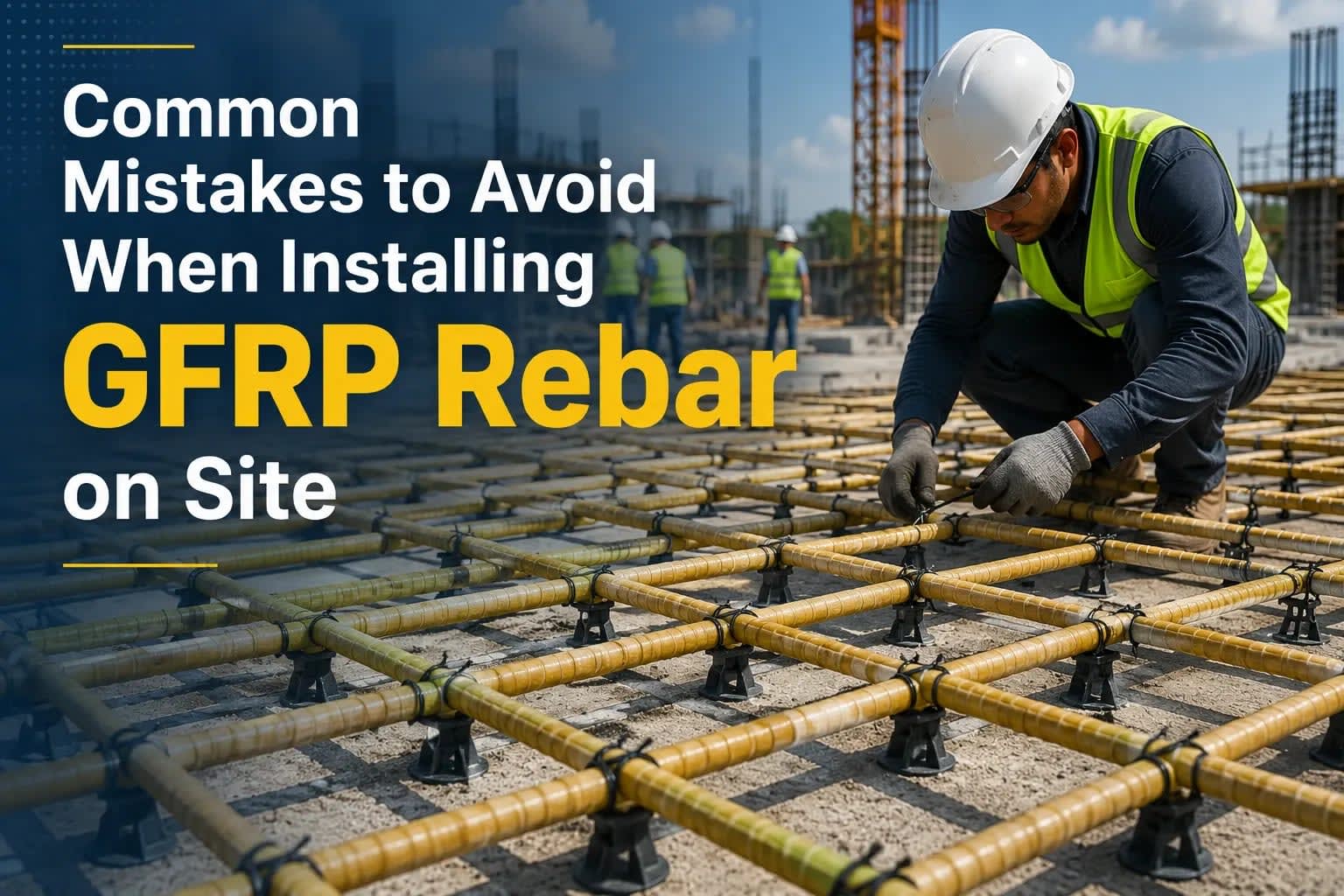
GFRP Rebars are becoming a preferred choice for modern construction projects because they are lightweight, corrosion-resistant, and designed for long-term durability. Whether they are being used in bridges, highways, marine structures, or commercial buildings, GFRP rebars offer several advantages that help improve the lifespan of a structure.
However, like any construction material, proper installation is important. Even high-quality rebars may not deliver their full benefits if basic installation practices are ignored. The good news is that most site mistakes are easy to avoid when workers and contractors know what to watch out for.
Let's look at some of the most common mistakes made during GFRP rebar installation and how they can be avoided.
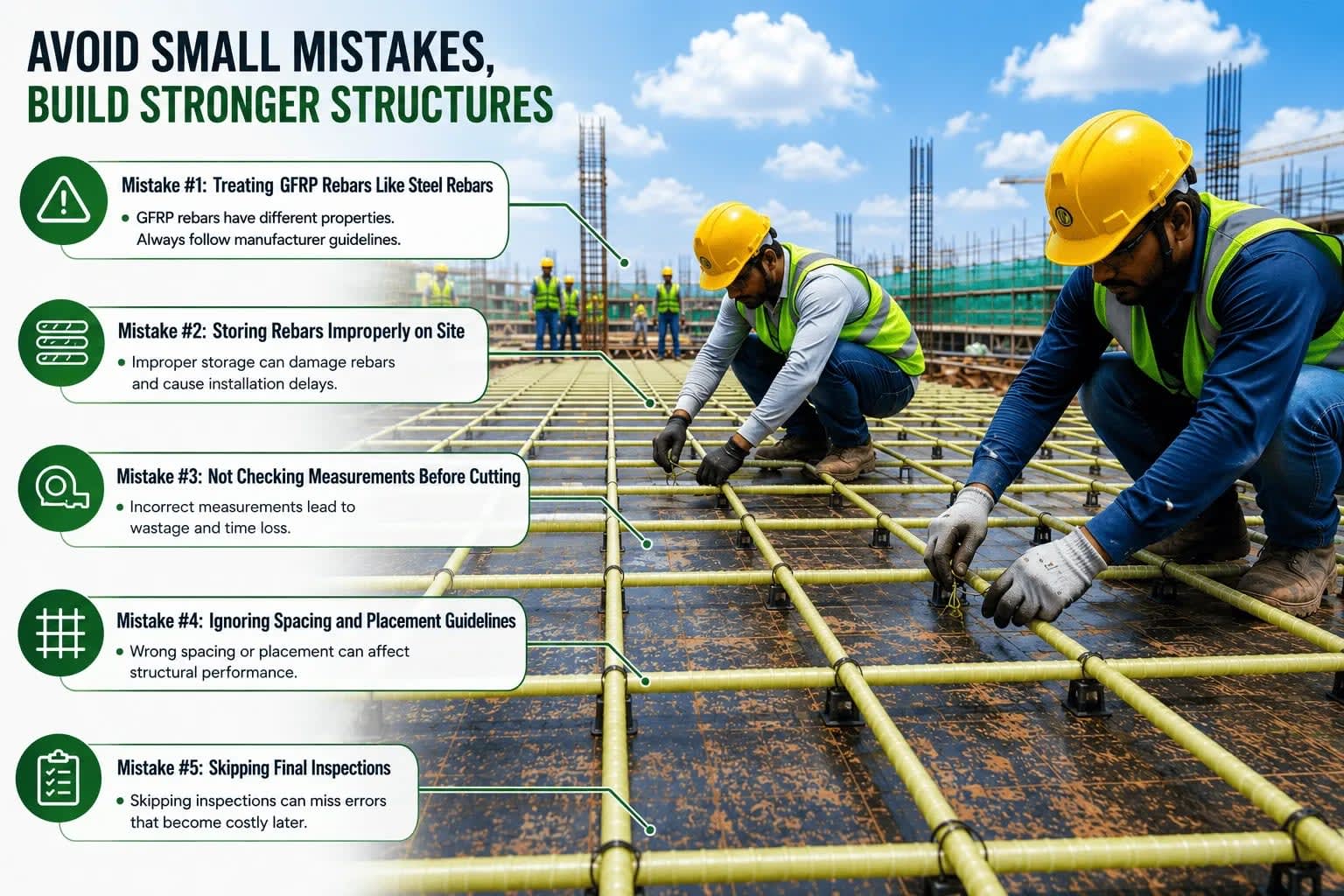
Mistake #1: Treating GFRP Rebars Like Steel Rebars
One of the biggest mistakes on construction sites is assuming that GFRP rebars can be handled exactly like steel rebars. While both are used for reinforcement, they have different properties and installation requirements.
Many workers follow the same methods they have used for steel reinforcement without checking the manufacturer's recommendations. Understanding the differences helps ensure smoother installation and better project outcomes.
Mistake #2: Storing Rebars Improperly on Site
Installation problems often start before the actual work begins. Rebars that are left unorganized or stored carelessly can create handling difficulties later.
Keeping materials properly arranged and protected helps maintain site efficiency and ensures that installation work starts without unnecessary delays.
Mistake #3: Not Checking Measurements Before Cutting
Rushing into the cutting process without verifying measurements can lead to wasted material and additional work.
Before making any cuts, site teams should always review drawings and double-check dimensions. A few extra minutes spent measuring can save both time and money during the project.
Mistake #4: Ignoring Spacing and Placement Guidelines
Proper spacing and placement are important for any reinforcement system. Even small positioning errors can affect the reinforcement layout and create challenges later.
Following approved drawings and checking the placement before concrete pouring helps ensure that the rebars are installed correctly.
Mistake #5: Skipping Final Inspections
Many projects work under tight deadlines, but skipping final checks is never a good idea.
A quick inspection before concrete placement can help identify missing bars, incorrect spacing, or other small issues that are much easier to fix before the pour begins.
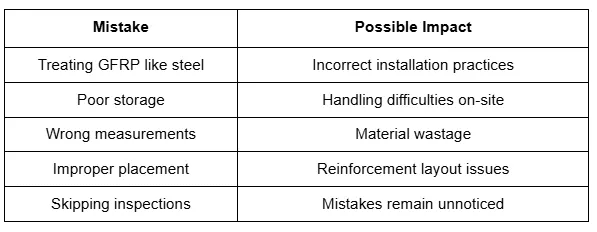
Common Installation Mistakes and Their Impact
Why Proper Installation Matters More Than Most People Think
Many contractors focus heavily on choosing the right material but pay less attention to installation practices.
The reality is simple: even the best reinforcement material performs best when installed correctly. Proper installation helps improve project quality, reduce delays, and minimize costly rework.
When installation is done properly, contractors can fully benefit from the advantages of gfrp in construction, including durability, reduced maintenance requirements, and long-term performance.
Simple Ways to Avoid Installation Mistakes
The good news is that most installation errors can be prevented with a few simple steps.
Before Installation Begins
- Review project drawings carefully.
- Ensure workers understand installation requirements.
- Check all materials before use.
- Organize storage areas properly.
During Installation
- Verify measurements before cutting.
- Follow approved placement layouts.
- Monitor spacing and alignment.
- Conduct regular quality checks.
These small actions can significantly improve installation quality and reduce project risks.
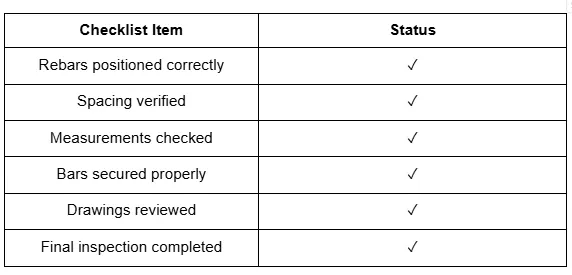
Quick Site Checklist Before Concrete Pouring
Are Contractors Getting the Full Value of GFRP Rebars?
Many contractors invest in quality materials because they want structures that last longer and require less maintenance.
The same thinking should apply to installation.
Why Do Some Projects Run More Smoothly Than Others?
In most cases, it comes down to planning and communication.
Teams that spend a little time discussing installation requirements usually face fewer surprises during execution.
As adoption of gfrp reinforcement continues to increase, this becomes even more important.
What Should Teams Focus on Before the Pour?
Before concrete placement, site teams should look at more than just whether the bars are present.
They should confirm:
- Layout accuracy.
- Spacing.
- Measurements.
- Drawing compliance.
- Overall readiness.
A few minutes of checking can prevent hours of correction work.
Conclusion
The growing popularity of glass fiber reinforced polymer reinforcement is easy to understand. Contractors are looking for materials that offer durability, corrosion resistance, and long-term value, and GFRP rebars deliver on all three.
However, successful projects depend on more than choosing the right material. Storage, measurements, placement, and inspections all play an important role in getting the results the design intends.
The good thing is that most installation mistakes are easy to avoid. A little planning, a little attention to detail, and a final inspection before concrete placement can make a noticeable difference.
As more engineers and contractors discover new gfrp uses across infrastructure, industrial, and commercial projects, understanding these practical installation lessons will help ensure those projects perform exactly as expected for years to come.
FAQs
1. What is the most common mistake when installing GFRP rebar?
The most common mistake is treating GFRP rebar the same way as traditional steel rebar. Since GFRP has different properties, following the manufacturer's installation guidelines is important for achieving the best performance.
2. Can GFRP rebars be cut on-site?
Yes, GFRP rebars can be cut on-site using appropriate tools. However, measurements should always be checked carefully before cutting to avoid material wastage and installation delays.
3. Why is proper spacing important when installing GFRP rebars?
Proper spacing helps ensure the reinforcement system performs as intended. Incorrect spacing or placement can affect the reinforcement layout and may require corrections before concrete pouring.
4. Do GFRP rebars require special handling during installation?
GFRP rebars are lightweight and easy to handle, but workers should still follow recommended handling and storage practices. Proper handling helps maintain installation efficiency and prevents avoidable site issues.
5. What should be checked before pouring concrete over GFRP rebars?
Before concrete placement, site teams should verify rebar positioning, spacing, measurements, tying, and compliance with project drawings. A final inspection helps identify and correct any issues before the pour begins.