
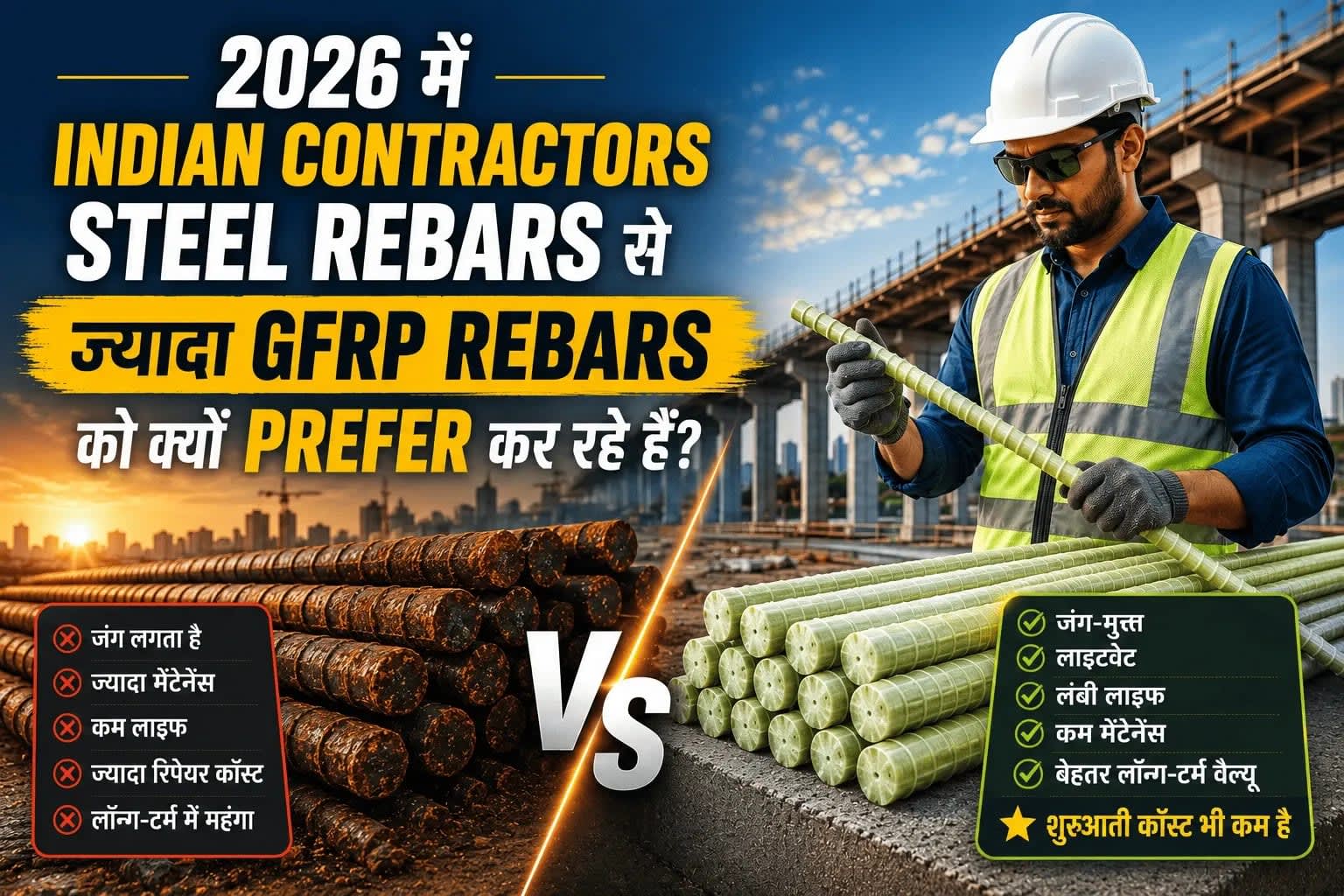
GFRP Rebars are becoming a hot topic in the construction industry, and for good reason. For years, steel rebar was the default choice for almost every reinforced concrete project. Whether it was a bridge, a commercial building, or a residential structure, steel was the material most people trusted without much debate.
Today, that conversation is changing.
Builders and engineers are no longer looking at reinforcement materials based only on strength. They are asking bigger questions. How long will the structure last? How much maintenance will it need? Will the reinforcement perform well in harsh conditions?
These questions are pushing many project teams to compare traditional steel reinforcement with newer alternatives like GFRP. If you're currently deciding between steel rebar suppliers and GFRP rebar manufacturers, understanding the practical differences can save both time and money in the long run.
Why Are More Construction Projects Looking Beyond Steel Rebar?
Steel rebar has been used in construction for many years, but today's projects demand more than just strength. Engineers and project owners are increasingly looking for reinforcement materials that can deliver durability, lower maintenance requirements, and longer service life.
One challenge with steel is that it can be vulnerable to corrosion when exposed to moisture, chemicals, or saline environments. Over time, this may lead to repairs, maintenance work, and additional costs that were not part of the original construction budget.
This is one of the main reasons why GFRP rebars are gaining attention across the construction industry.
Unlike steel, GFRP rebars do not rust or corrode. Whether the structure is exposed to water, chemicals, humidity, or coastal conditions, the reinforcement remains protected. This makes GFRP a practical choice for projects where long-term durability is a priority.
The difference becomes even more noticeable in applications such as:
- Bridges and flyovers.
- Marine and coastal structures.
- Water treatment plants.
- Industrial facilities.
- Underground infrastructure.
Another advantage is weight. GFRP rebars are significantly lighter than traditional steel reinforcement, making transportation, handling, and installation easier on-site.
As construction projects continue to focus on lifecycle performance rather than just initial material costs, many engineers are recognizing that GFRP rebars offer a combination of strength, corrosion resistance, and long-term value that is difficult to ignore.
What Makes GFRP Rebars Different From Traditional Reinforcement?
At first glance, both steel and GFRP serve the same purpose—they strengthen concrete. The difference becomes more noticeable when you look at how they perform over time.
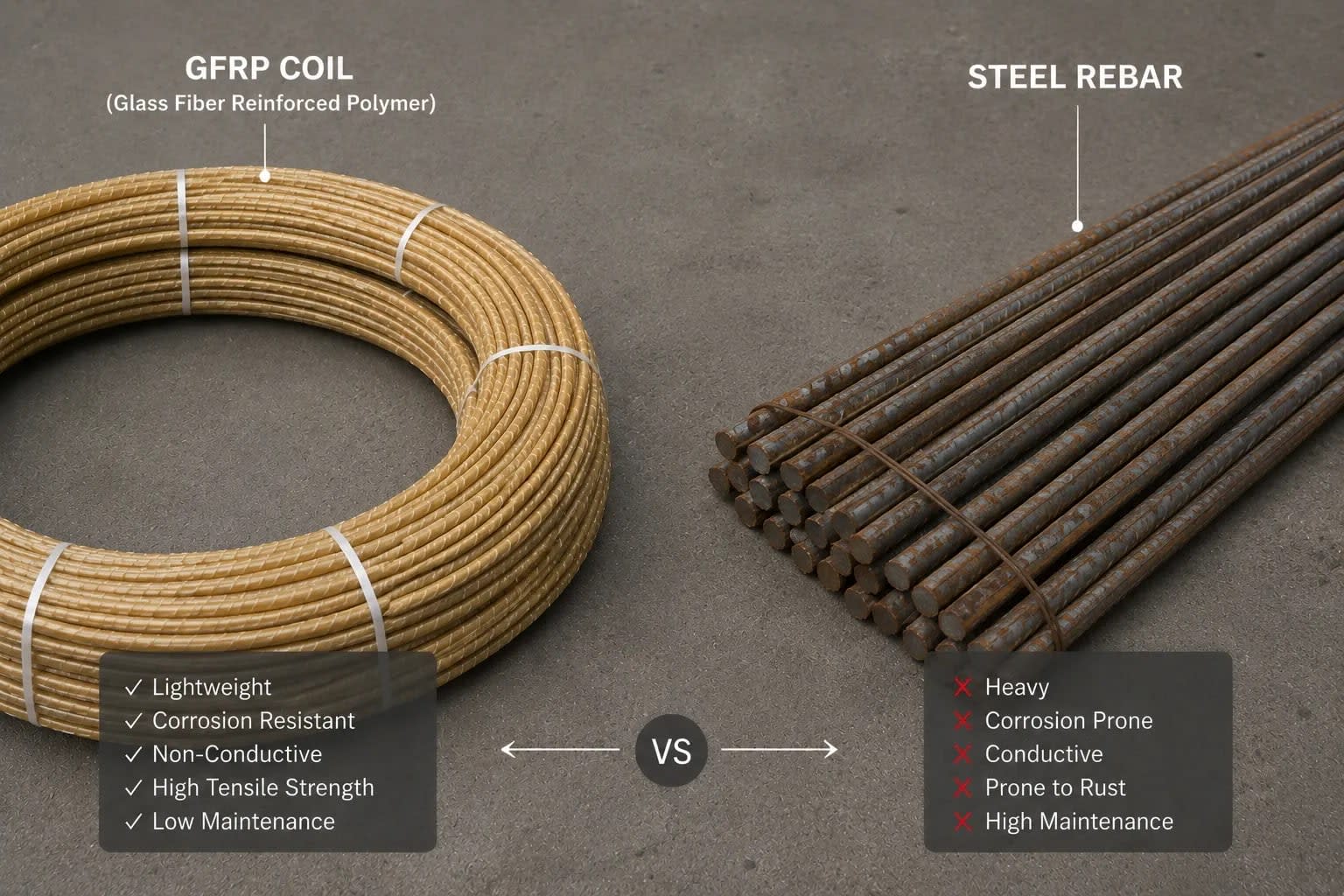
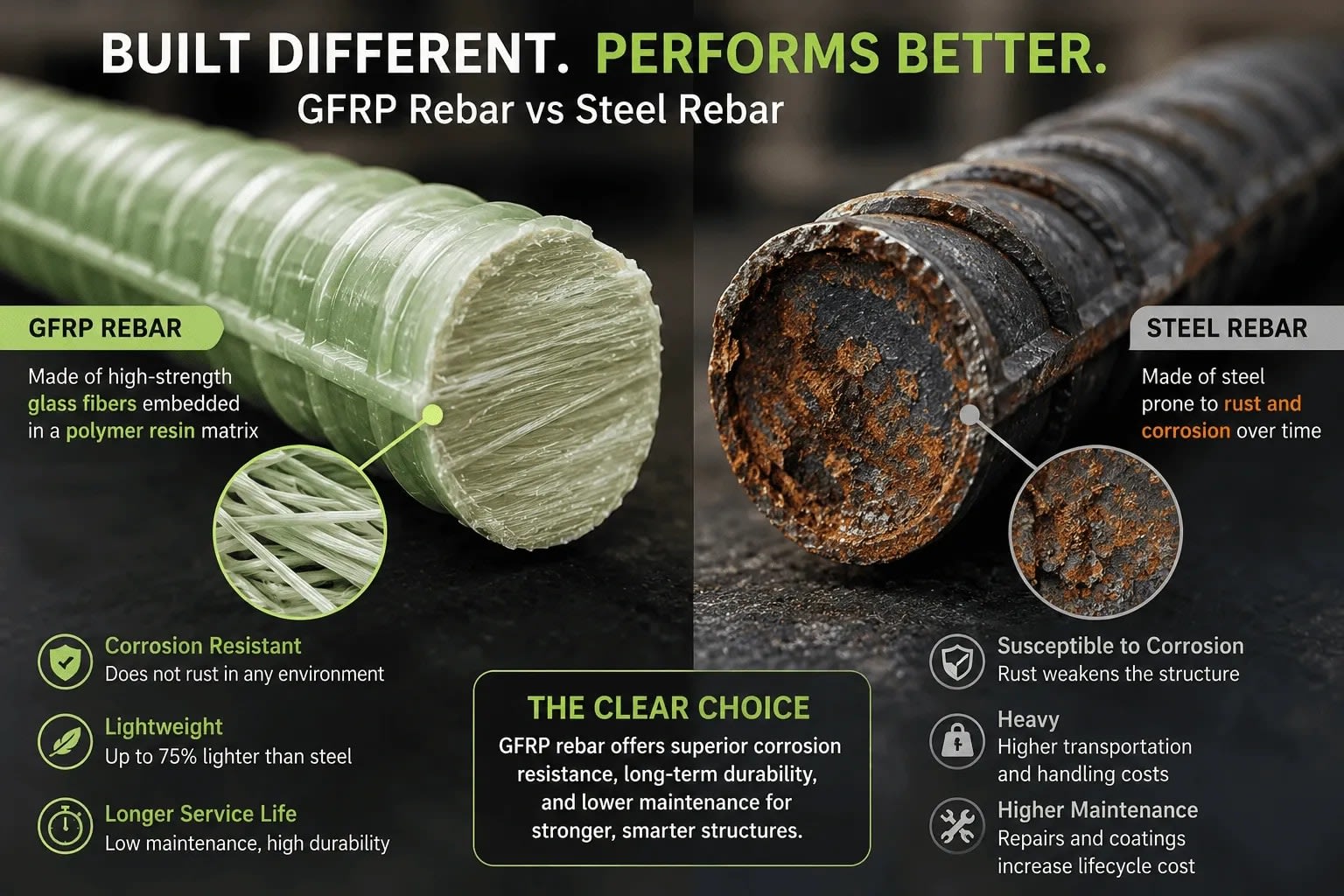
GFRP, or Glass Fiber Reinforced Polymer, is made using high-strength glass fibers combined with a durable resin system. This gives it characteristics that are very different from conventional steel reinforcement.
Some of the advantages that attract engineers include:
Corrosion Resistance
Unlike steel, GFRP does not rust. This makes it especially useful in environments where water, salts, and chemicals are constantly present.
Lightweight Handling
GFRP rebars are significantly lighter than steel. This can make transportation easier and help crews work more efficiently during installation.
Longer Service Life
When reinforcement remains protected from corrosion, the structure often requires fewer repairs over its lifetime.
Non-Conductive Properties
For projects where electrical conductivity or magnetic interference is a concern, GFRP offers an additional advantage.
Simply put, GFRP is designed to solve some of the common problems that engineers have faced with traditional reinforcement for years.
How Does the GFRP Rebar vs Steel Rebar Comparison Affect Real Projects?
When discussing gfrp rebar vs steel rebar, most people focus on purchase price or strength. However, experienced engineers usually look beyond the initial cost.
Here's a simple comparison:
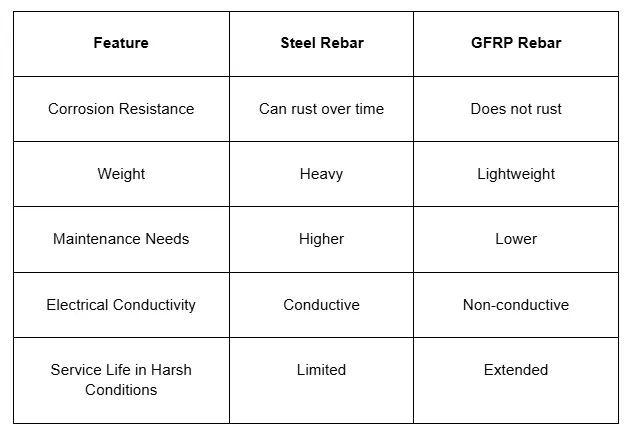
The practical benefit is straightforward. A reinforcement material that requires fewer repairs and performs well for longer can provide significant value over the life of a project.
Can High Strength Reinforcement Bars Improve Long-Term Project Value?
Strength is obviously important, but strength alone doesn't tell the whole story.
The best high strength reinforcement bars are those that continue performing year after year without creating maintenance problems.
This becomes especially important in projects such as:
Transportation Infrastructure
- Bridges
- Highways
- Flyovers
- Metro systems
Marine Construction
- Ports
- Jetties
- Seawalls
Industrial Facilities
- Chemical plants
- Power stations
- Water treatment plants
In these environments, durability can be just as important as load-carrying capacity.
Is GFRP Stronger Than Steel?
One question that comes up quite often is: is gfrp stronger than steel?
The answer isn't as simple as yes or no because both materials perform differently.
GFRP offers excellent tensile strength, which means it can handle significant pulling forces. This is one reason why engineers are increasingly considering it for demanding applications.
There are also several practical advantages:
Higher Resistance to Corrosion
Steel can be affected by moisture and salt exposure over time. GFRP remains unaffected by these conditions.
Easier Transportation and Installation
Because GFRP is lightweight, handling it on-site is generally simpler.
Reduced Maintenance
Structures reinforced with GFRP often face fewer corrosion-related repairs throughout their lifespan.
Better Performance in Aggressive Environments
Coastal projects, marine structures, and water-related infrastructure frequently benefit from corrosion-resistant reinforcement.
Rather than focusing on a single strength measurement, most engineers evaluate which material will provide better overall performance throughout the structure's life.
What Should You Look For Before Choosing a Rebar Manufacturer?
The quality of the manufacturer can be just as important as the product itself.
Before making a decision, it's worth evaluating a few key factors:
- Manufacturing quality standards.
- Product consistency.
- Technical expertise.
- Industry experience.
- Project support capabilities.
A reliable manufacturer should not only supply reinforcement bars but also help project teams select the right solution for their specific requirements.
How Can Your Reinforcement Choice Affect Future Maintenance Costs?
Many construction decisions are made based on upfront costs. While that's understandable, the real financial impact often appears years later.
For example, if reinforcement starts deteriorating due to corrosion, repairs can become expensive and disruptive.
Choosing a reinforcement solution that resists environmental damage can help:
- Reduce repair frequency.
- Extend structural lifespan.
- Lower maintenance budgets.
- Improve overall project value.
This is one reason why many modern infrastructure projects are beginning to take a lifecycle approach rather than focusing only on initial material costs.
Why Are More Infrastructure Projects Moving Toward Advanced Reinforcement Solutions?
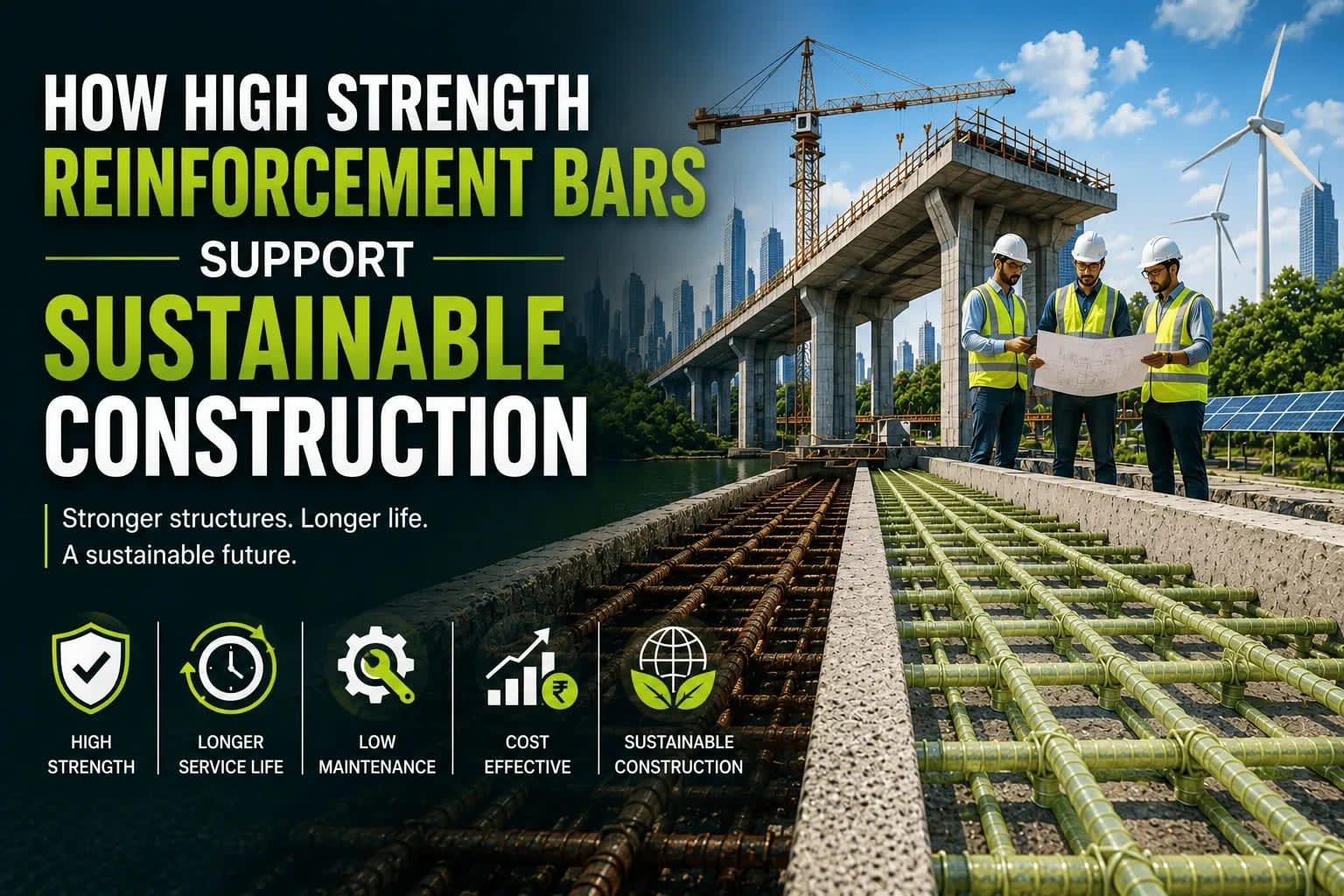
Infrastructure today is expected to last longer than ever before. Governments, developers, and project owners are investing heavily in assets that must perform reliably for decades.
As a result, materials are being evaluated not only for strength but also for durability, efficiency, and maintenance requirements.
When structures are exposed to moisture, chemicals, temperature fluctuations, or marine environments, corrosion-resistant reinforcement can provide a clear advantage. That's why advanced reinforcement technologies are becoming a bigger part of the conversation across the construction industry.
Conclusion
Choosing between steel rebar suppliers and GFRP rebar manufacturers isn't just about selecting a reinforcement material. It's about deciding how your structure will perform years after construction is complete.
While steel remains a trusted option for many applications, GFRP is gaining attention because of its corrosion resistance, lightweight nature, and lower maintenance requirements. For builders and engineers focused on long-term value, these benefits can make a meaningful difference.
As construction standards continue to evolve, working with experienced rebar manufacturers in india can help ensure you're choosing reinforcement solutions that meet both today's requirements and tomorrow's expectations.
FAQs
1. Why are many engineers choosing GFRP rebars over steel rebars?
Many engineers prefer GFRP rebars because they do not rust, are lightweight, and require less maintenance over time. These benefits make them a reliable option for projects that need long-term durability.
2. Are GFRP rebars suitable for bridge and infrastructure projects?
Yes. GFRP rebars are increasingly used in bridges, highways, tunnels, and other infrastructure projects because they offer excellent corrosion resistance and long service life.
3. How do GFRP rebars perform in coastal and marine environments?
GFRP rebars perform exceptionally well in coastal and marine environments because they are resistant to saltwater and moisture, unlike traditional steel reinforcement that can corrode over time.
4. Is GFRP stronger than steel for construction applications?
GFRP rebars offer high tensile strength and excellent durability. While steel and GFRP have different performance characteristics, GFRP is often preferred in projects where corrosion resistance and long-term performance are important.
5. Do GFRP rebars help reduce maintenance costs?
Yes. Since GFRP rebars do not rust or corrode, structures reinforced with them generally require fewer repairs and maintenance activities, helping reduce long-term ownership costs.
6. What should I consider when choosing a GFRP rebar manufacturer?
Look for factors such as product quality, manufacturing standards, technical expertise, project experience, and the ability to provide reliable support throughout the construction process.